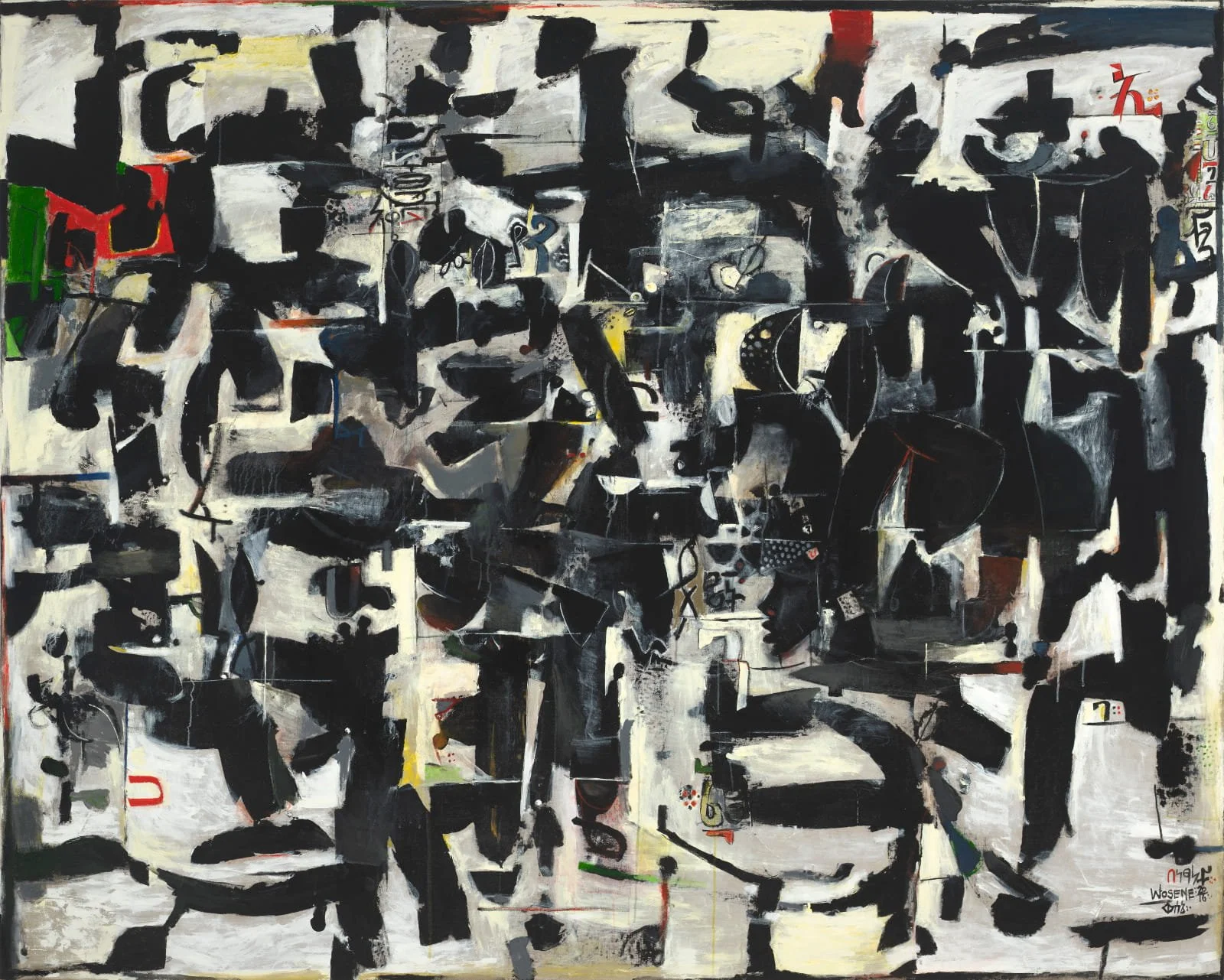
My Liberty, 2016, acrylic on linen, 81.75” x 101.25” (206.4 x 257.2 cm) Collection of Virginia Museum of Fine Arts, Richmond, VA
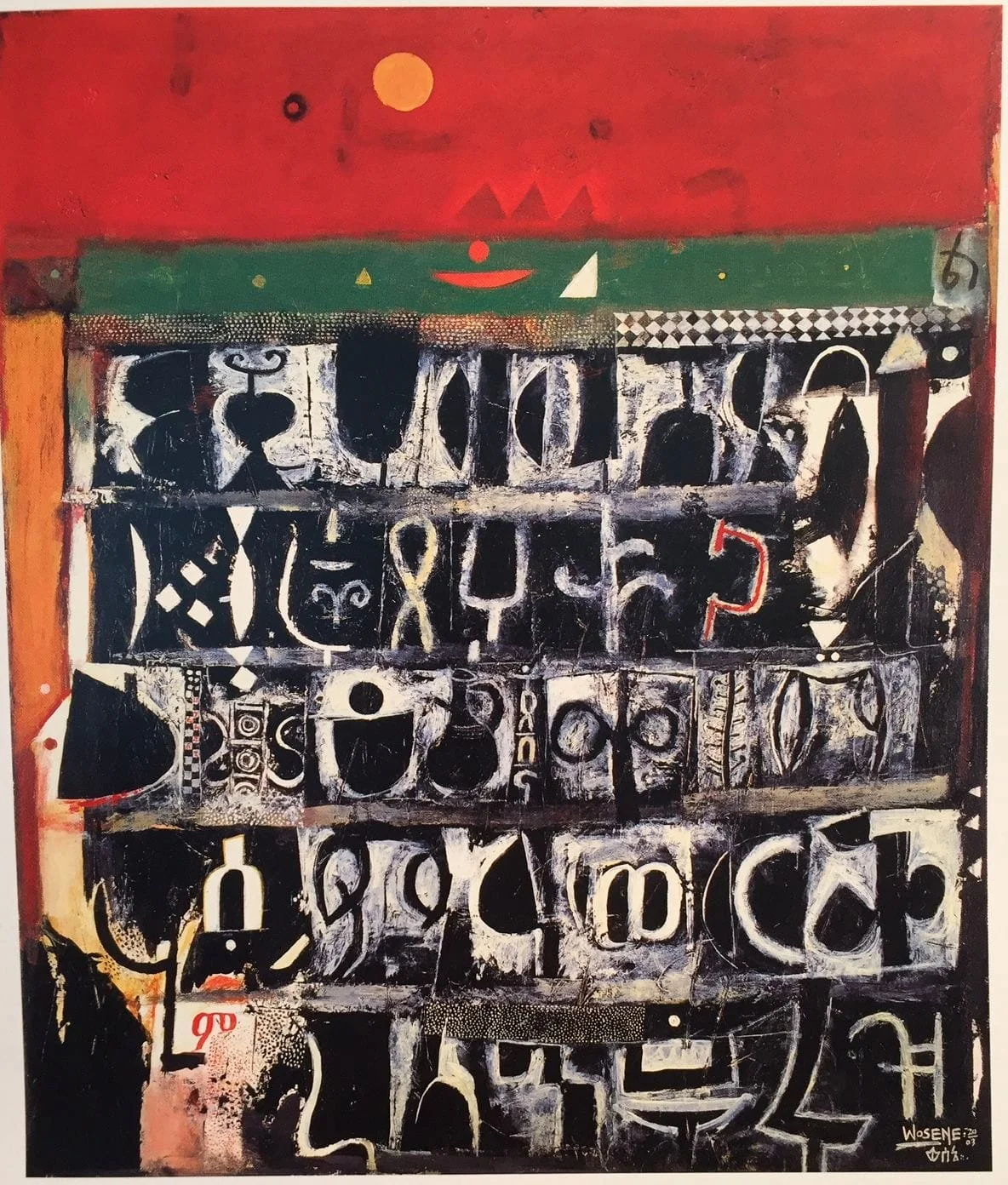
Night of the Red Sky, 2003, acrylic on linen, 36” x 30.75” (91.4 x 78.1 cm) Collection of Peabody Essex Museum, Salem, MA
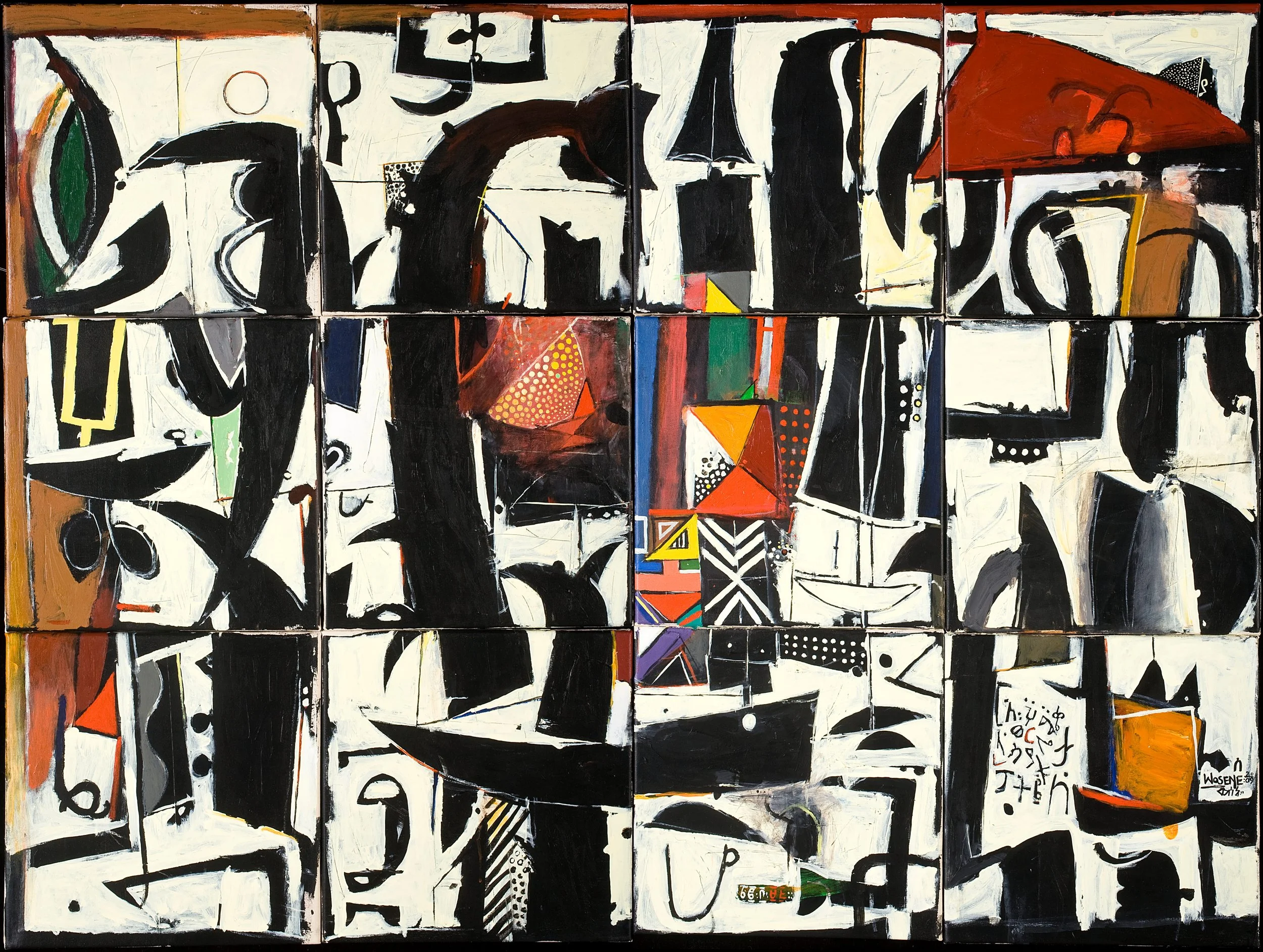
Migrations III, 2009, acrylic on canvas, 45” x 60” (114.3 x 152.4 cm) (12 panels at 15” x 15 (38.1 x 38.1 cm) each) Private collection
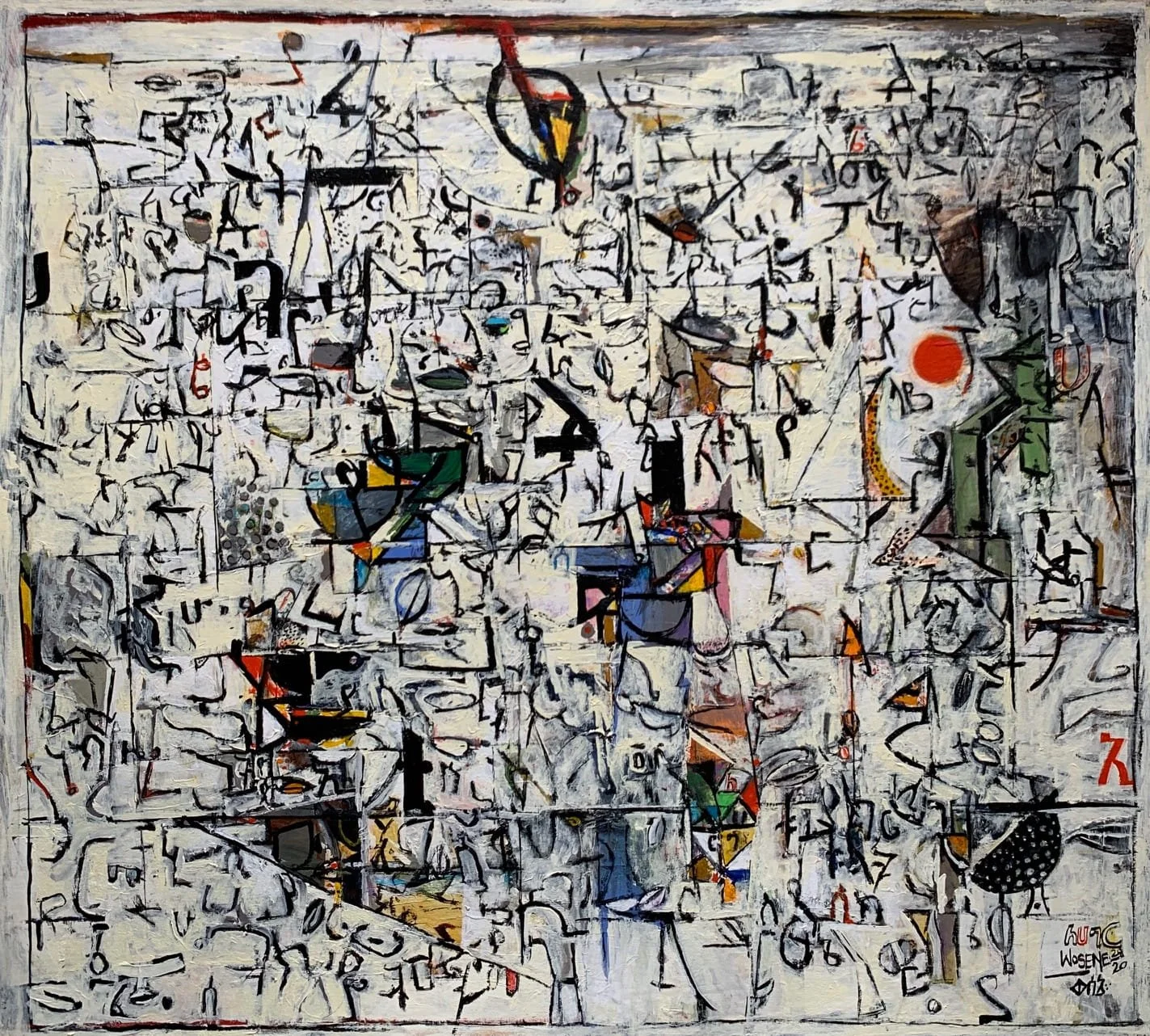
Independence Day III, 2020, acrylic on canvas, 36” x 40” (91.4 x 101.6 cm) Private collection
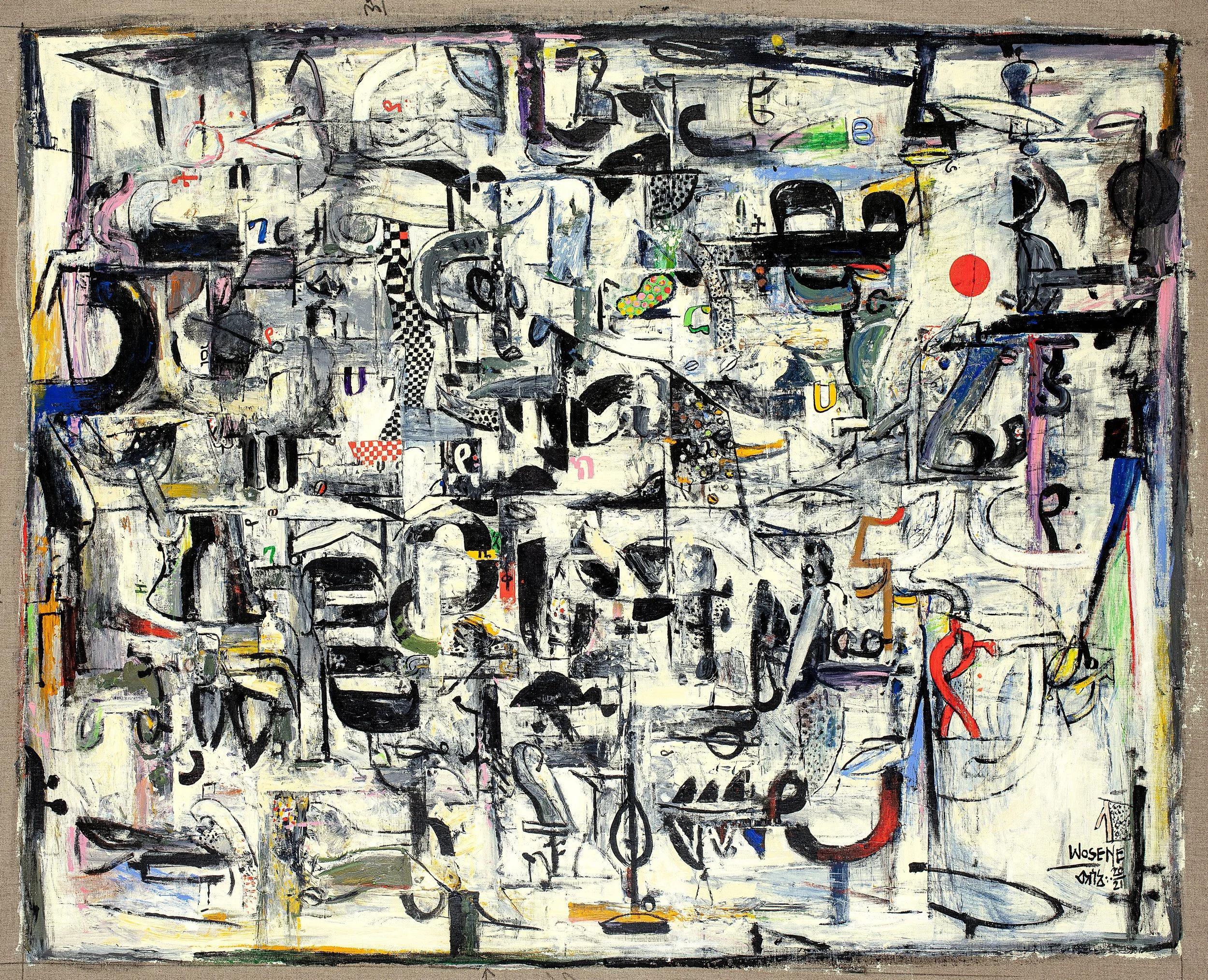
Words of Justice III, 2021, acrylic on linen, 38" x 48" (96.5 x 121.9 cm) Collection of the artist
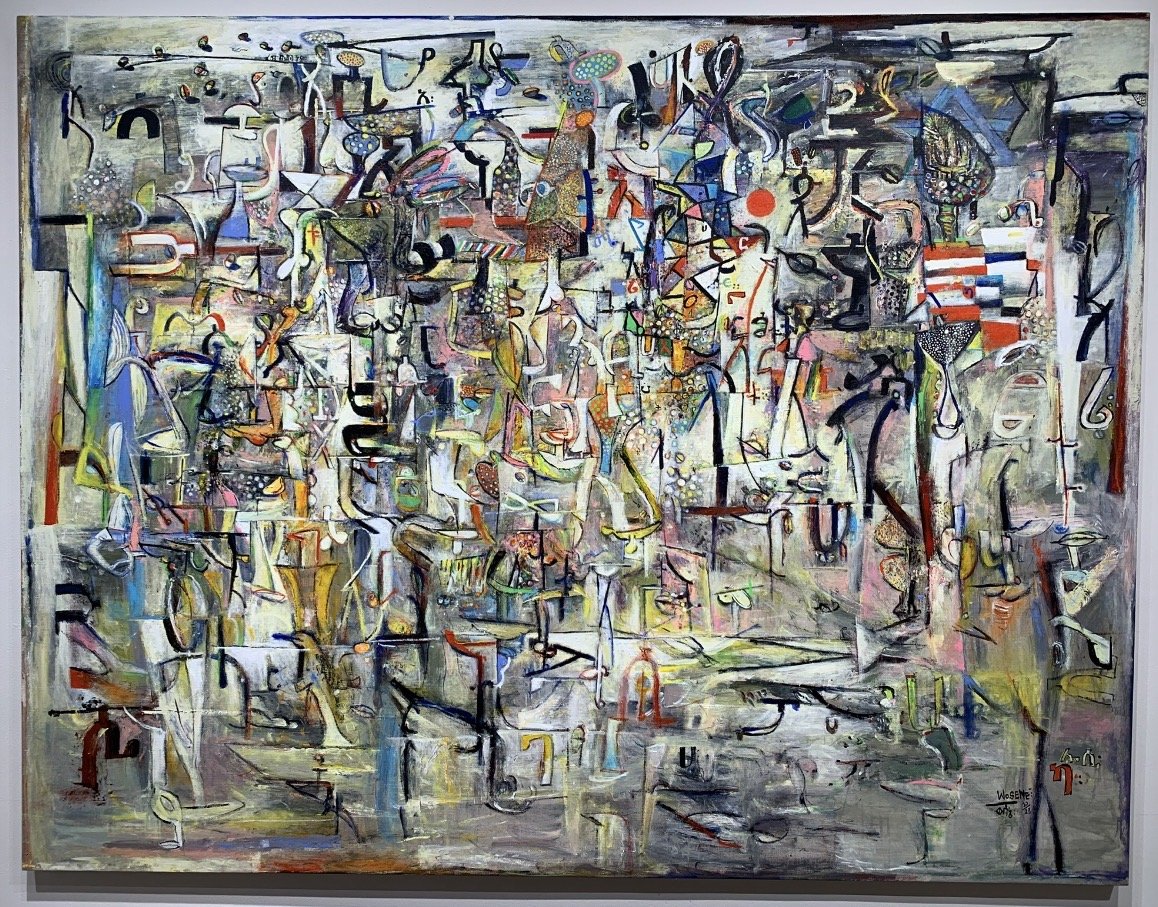
Lucy in America, 2023, acrylic on linen, 70” X 90” (177.8 x 228.6 cm) Private collection
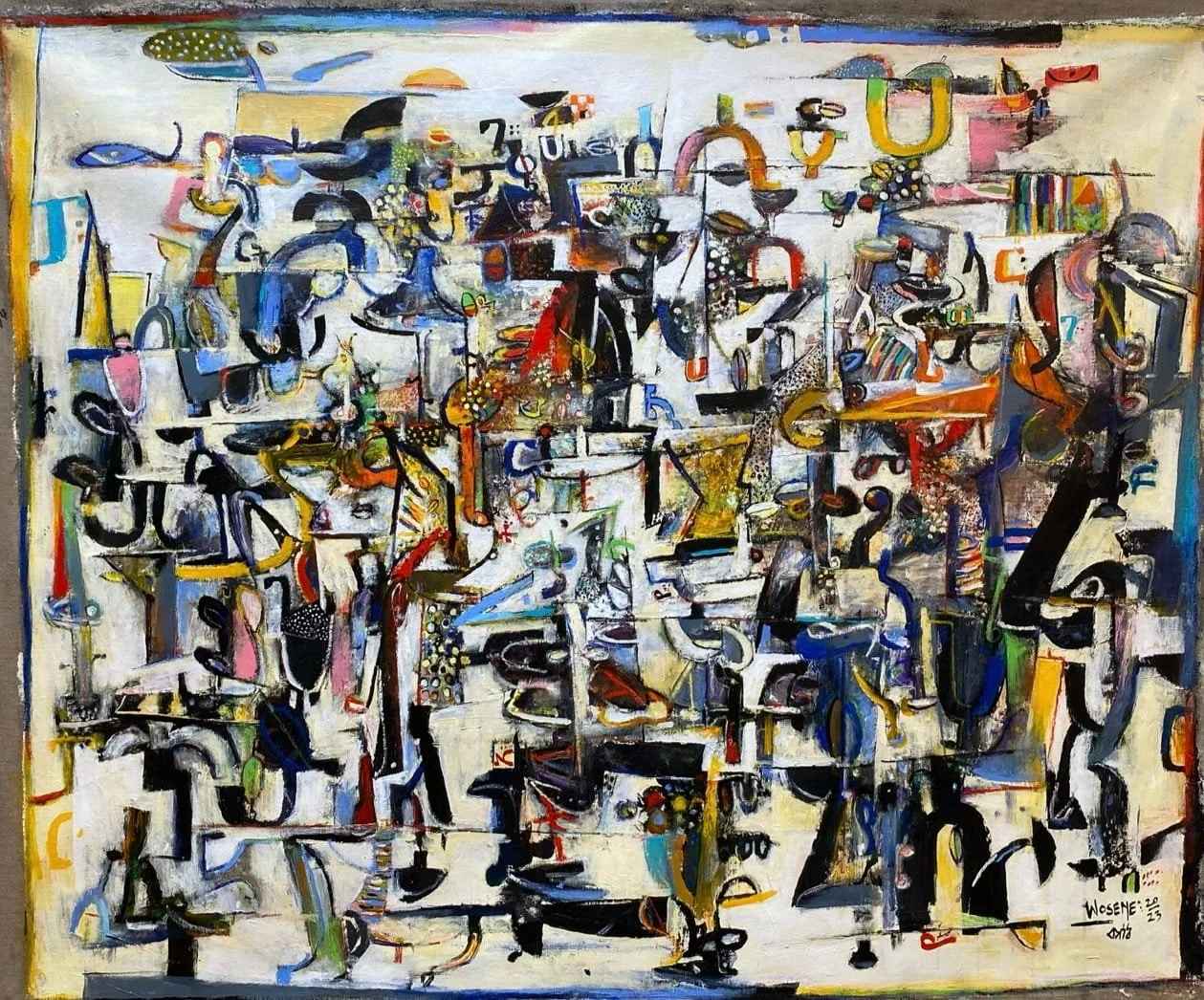
The Dance of Liberty, 2023, acrylic on linen, 44” x 54” (111.8 x 137.2 cm) Courtesy of Winfield Gallery, Carmel, CA
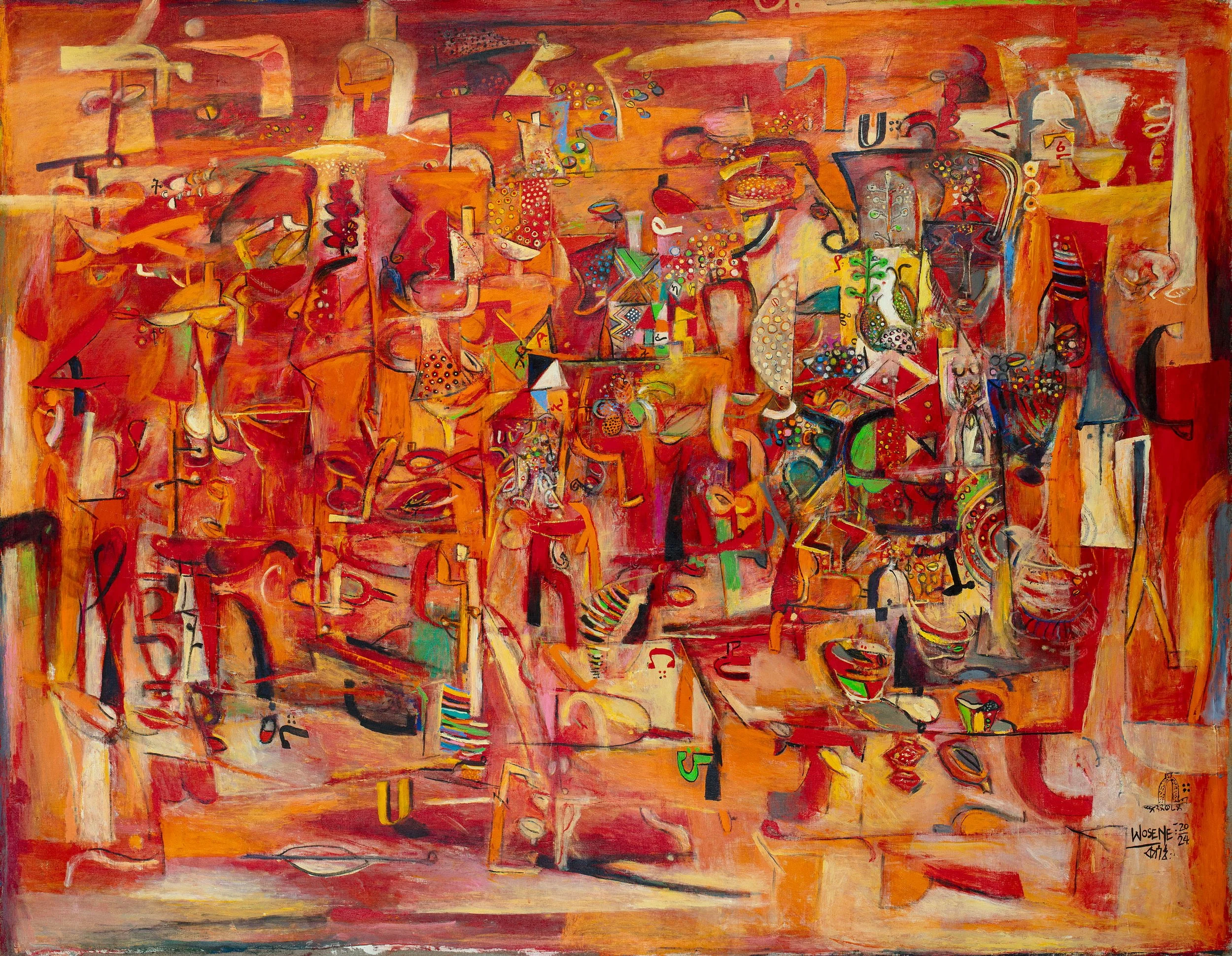
The Taste of Liberty, 2024, acrylic on linen, 62” x 78” (157.5 x 198.1 cm) Courtesy of Winfield Gallery, Carmel, CA
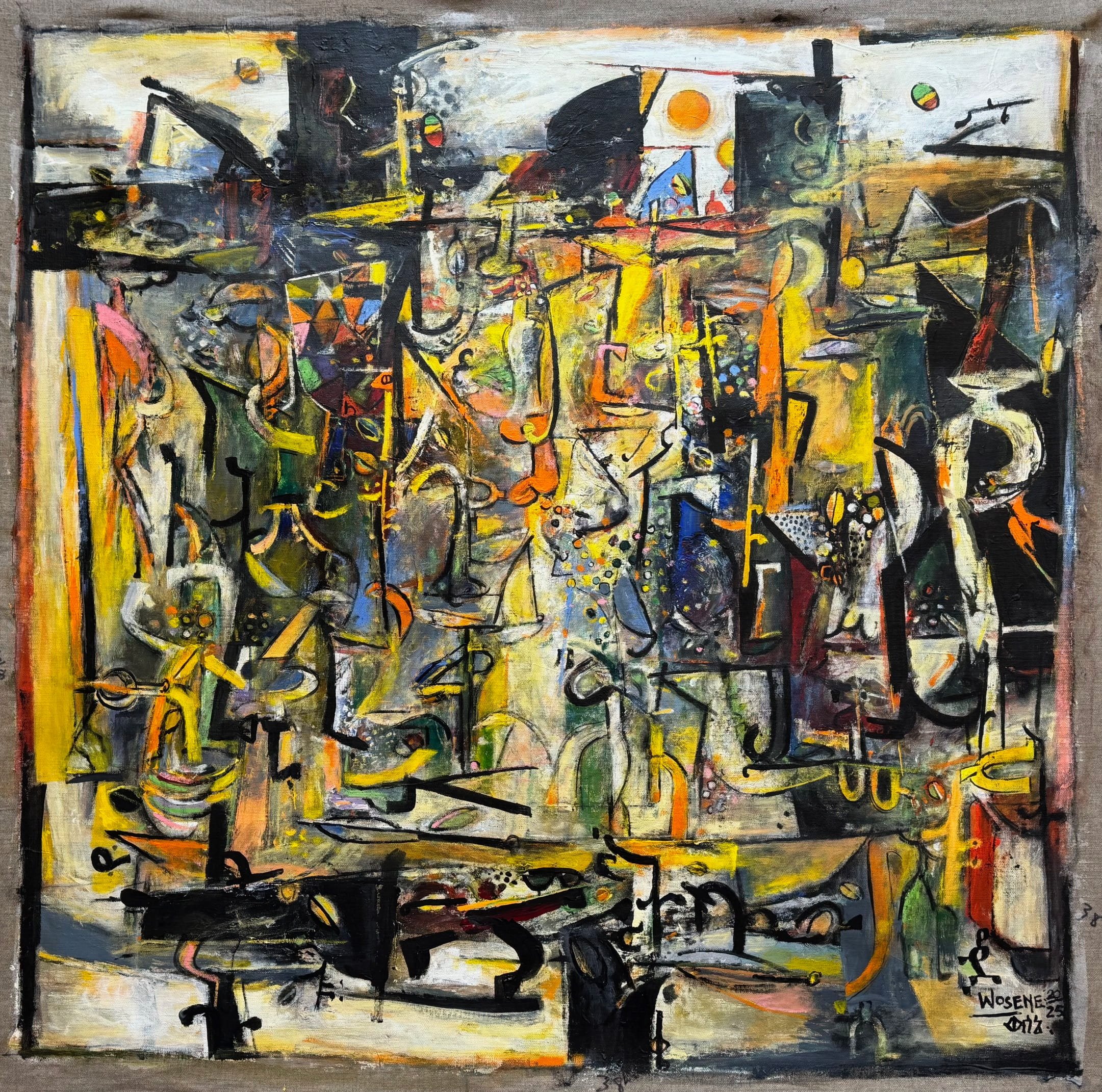
David and Goliath, 2025, acrylic on linen, 38” x 38” (96.5 x 96.5 cm) Courtesy of Skoto Gallery, New York, NY
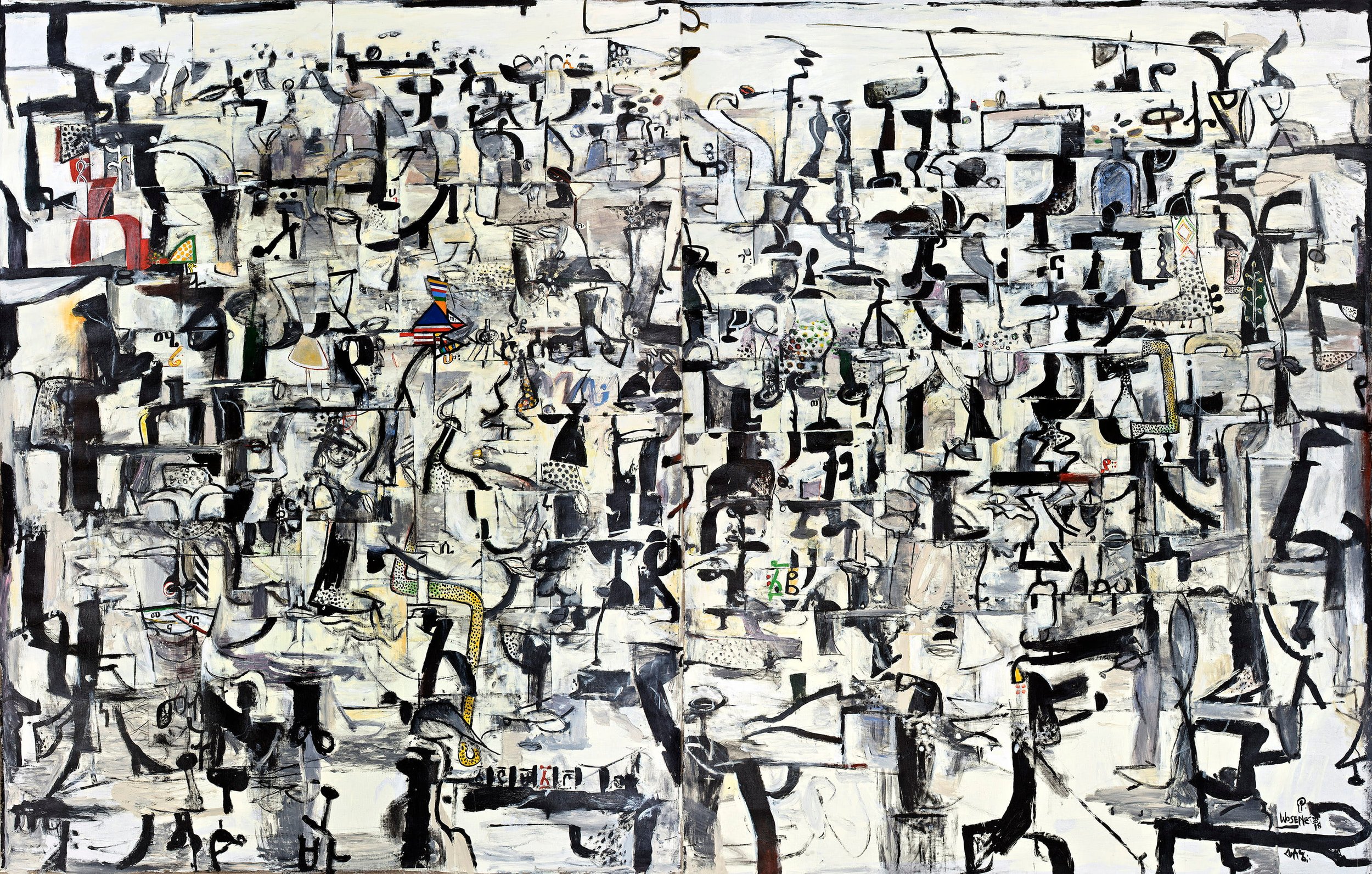
For Love of Freedom III, 2018, acrylic on linen, 96” x 156” (243 x 396.2 cm) (2 panels at 96” x 78” (243 x 198.1 cm) each) Courtesy of Sullivan Goss Gallery, Santa Barbara, CA
Liberty
In the painting Wosene titled My Liberty, 2016, at the lower right corner he inscribed “by being free” in Amharic above his name, affirming the freedom he deeply appreciates in America, the country he sought to go to in 1977 upon leaving Ethiopia to escape repressive conditions following the Ethiopian Revolution in 1974.
He started the painting using a broad palette knife and lustrous black paint to create unusually emphatic calligraphic forms. Patches of red, green, and yellow refer to the colors of the Ethiopian flag. A mask-like face (lower right center) began to suggest itself as the painting came to life, so he played it out and developed the serene profile as a reference to “Lucy,” the famous human ancestor whose 3.2-million-year-old skeletal remains were discovered in 1974 in Ethiopia.
My Liberty is decidedly about Wosene’s creative freedom as an artist, but it is equally born of love for his homeland and concern about liberty and human rights triggered by events in Ethiopia at the time he painted it. Amid the cauldron of heavy black strokes, several Amharic characters appear. In the upper right, the complex form of a letter in red is Amharic for “E” by which Wosene invokes Ethiopia. Below it near the right edge of the canvas several characters spell “unity,” or “one nation,” a plea for peace in the land of his birth.
Liberty has been a recurring theme in Wosene’s art throughout his career, as the other works in this section illustrate. It manifests equally in his concern for all people and in the love of creative license he appreciates when painting. He speaks about being inspired by Gebre Kristos Desta, one of his most revered teachers in art school in Addis, who did not impose rules but encouraged students to pursue their own vision. Liberty also ties closely to Wosene’s attachment to jazz as an expression of freedom. Not only did the US government employ jazz as a beacon of freedom through its Jazz Ambassadors program during the Cold War years, but musicians have spoken eloquently about the improvisational nature of jazz as a tool for personal expression, calling it a “perfect democracy” where each member has the freedom to contribute their special inspiration while working together within certain rules, or “laws,” of tempo, key, and harmonic progression.[1] Indeed, Duke Ellington, whose 1973 performance in Addis inspired Wosene, preferred to call jazz the “music of freedom of expression.”[2]
[1] Jeff Farley, “Making America’s Music: Jazz History and the Jazz Preservation Act” (PhD diss., University of Glasgow, 2008), see especially Ch 4: “Equating Jazz and Democracy,” 80-113.
[2] Duke Ellington, Music is My Mistress (New York: Da Capo, 1973), 309.