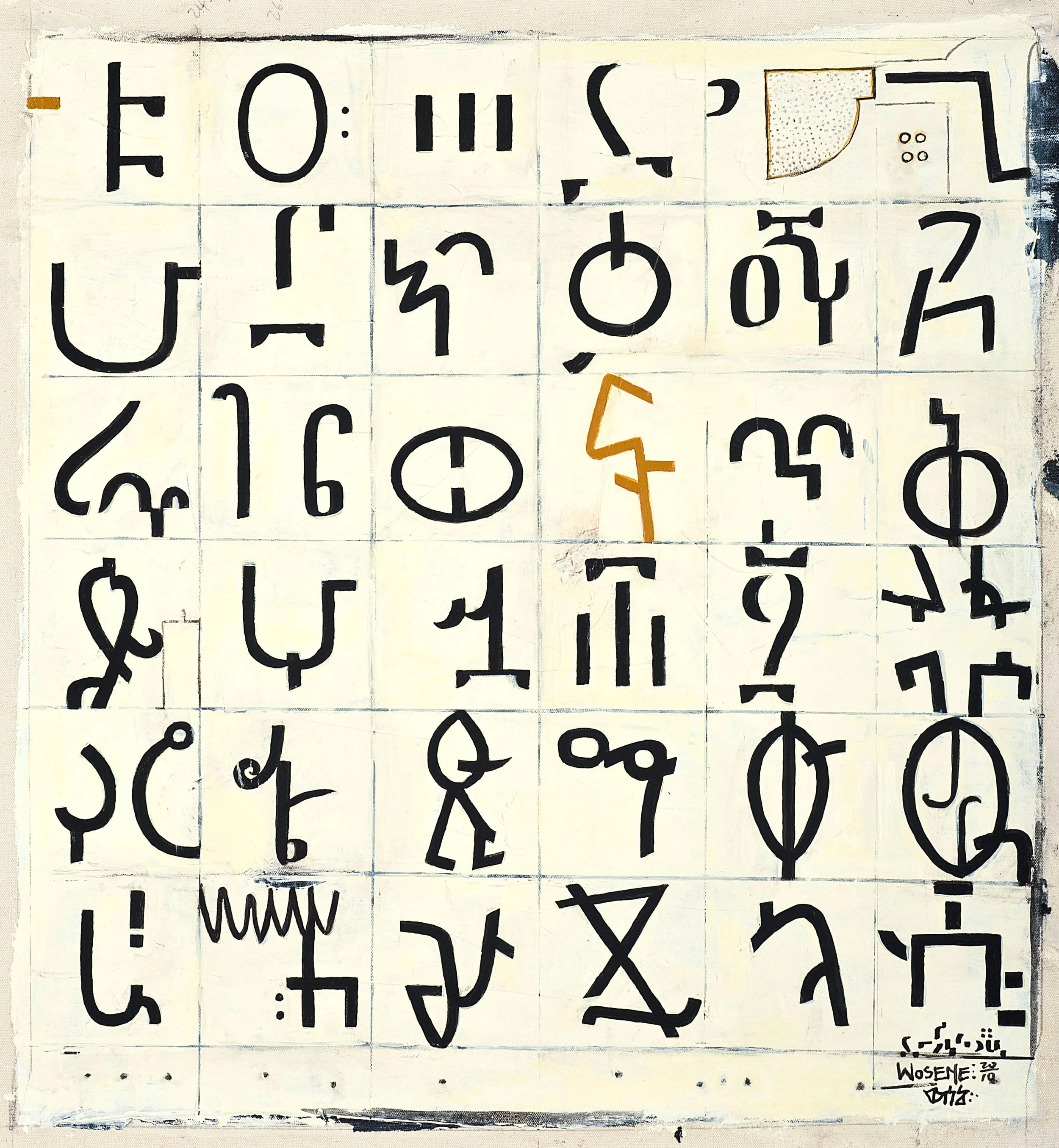
Africa Speaks, 2010, acrylic on linen, 28” x 24” (71.1 x 61 cm) Private collection
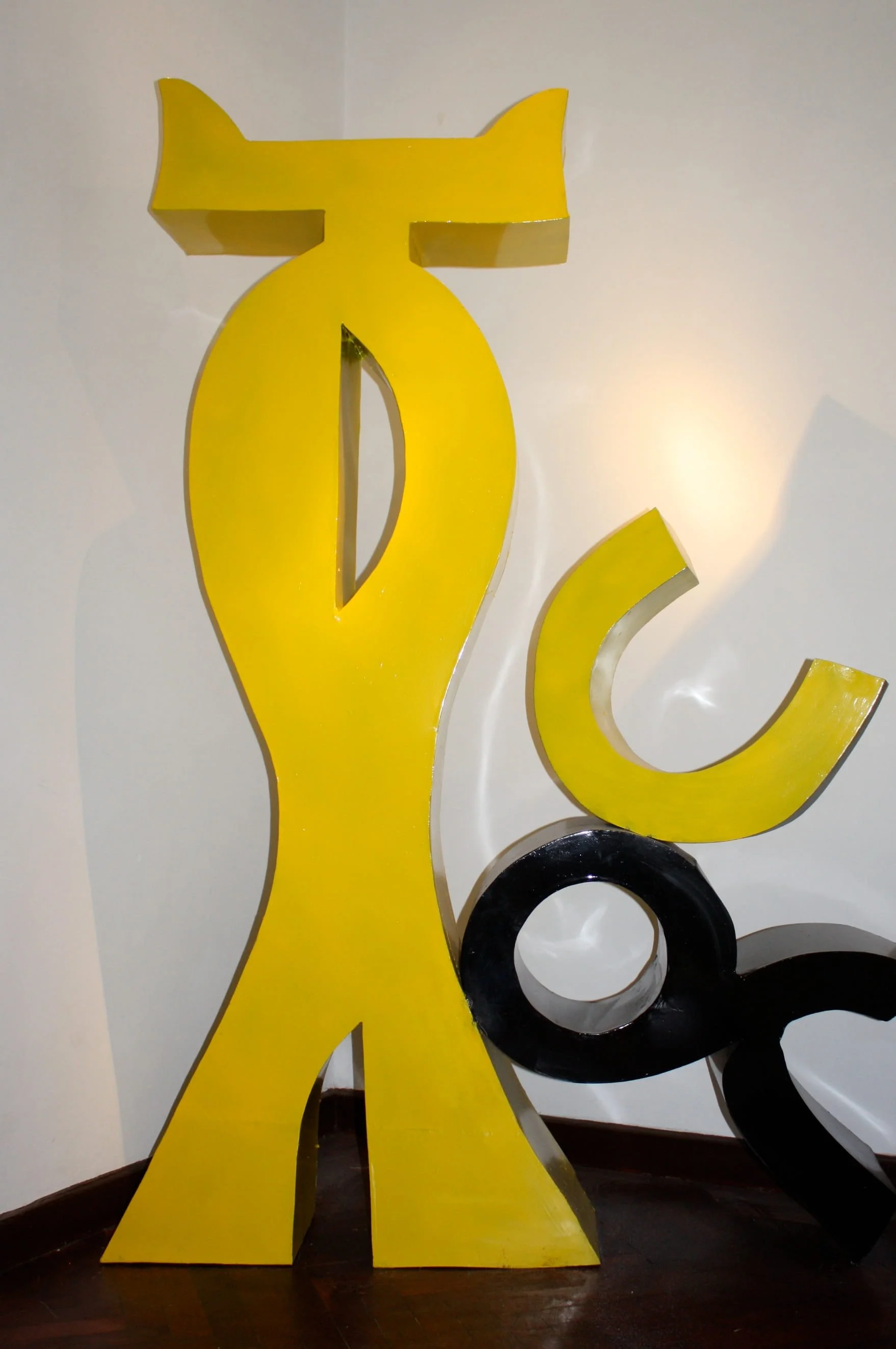
Adwa, 2010, sheet metal & metallic paint, 5’ x 8’ (152.4 x 243.8 cm) Collection of Tayitu Cultural and Educational Center, Addis Ababa, Ethiopia
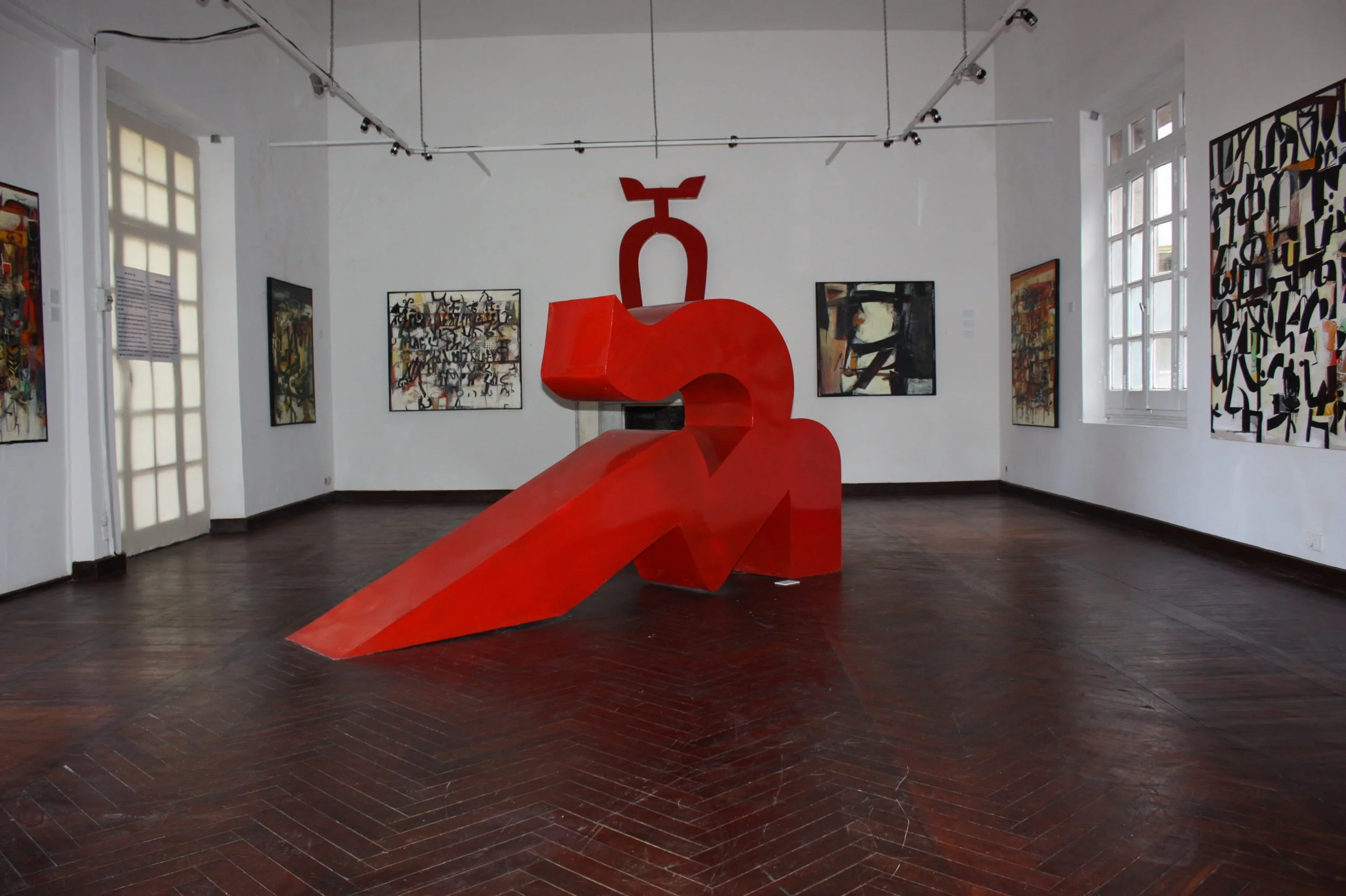
My Ethiopia IV, 2010, sheet metal & metallic paint, 5’ x 12’ (152.4 x 365.8 cm) Collection of Tayitu Cultural and Educational Center, Addis Ababa, Ethiopia
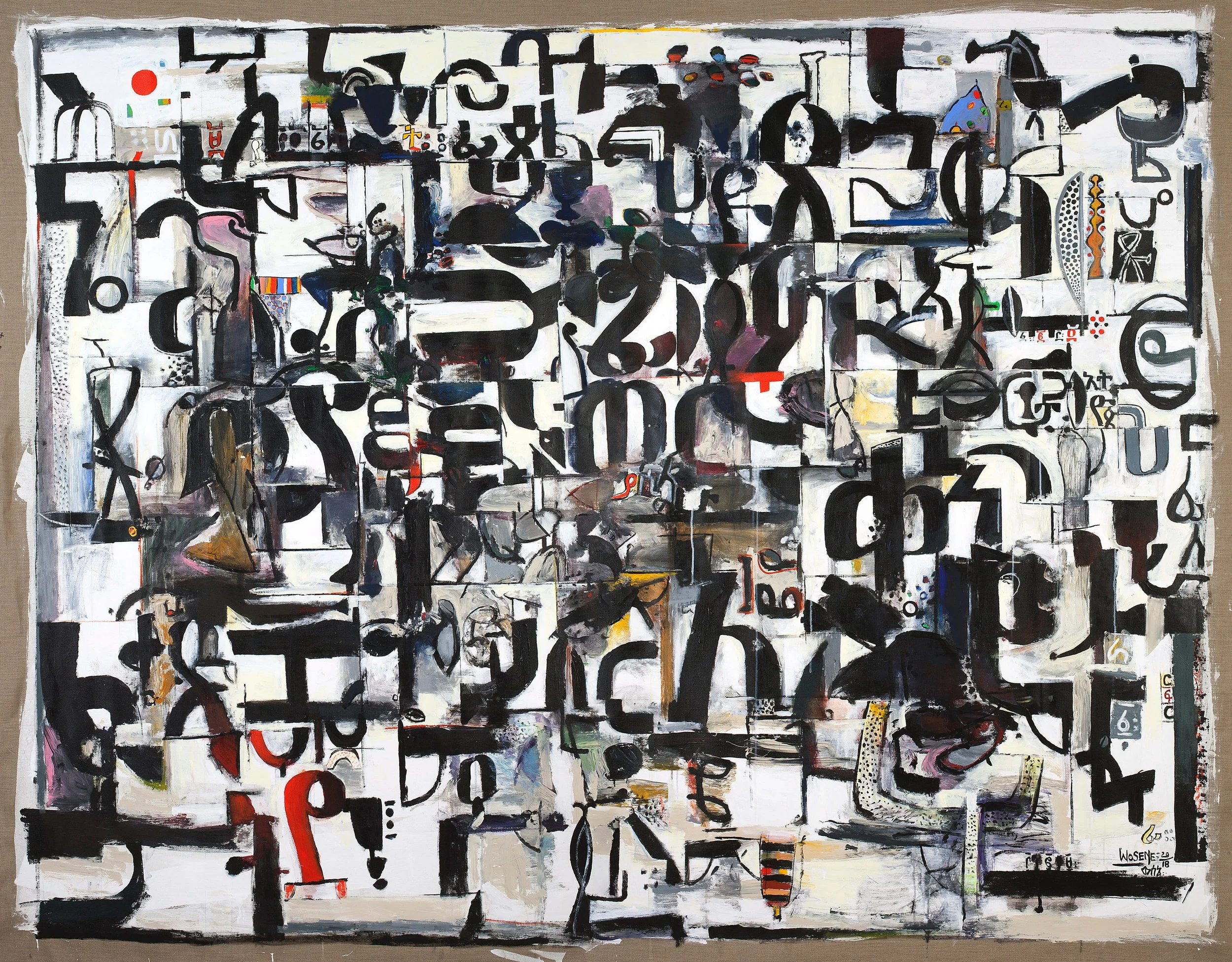
You Are Always New VII, 2018, acrylic on linen, 78” x 100” (198.1 x 254 cm) Private collection
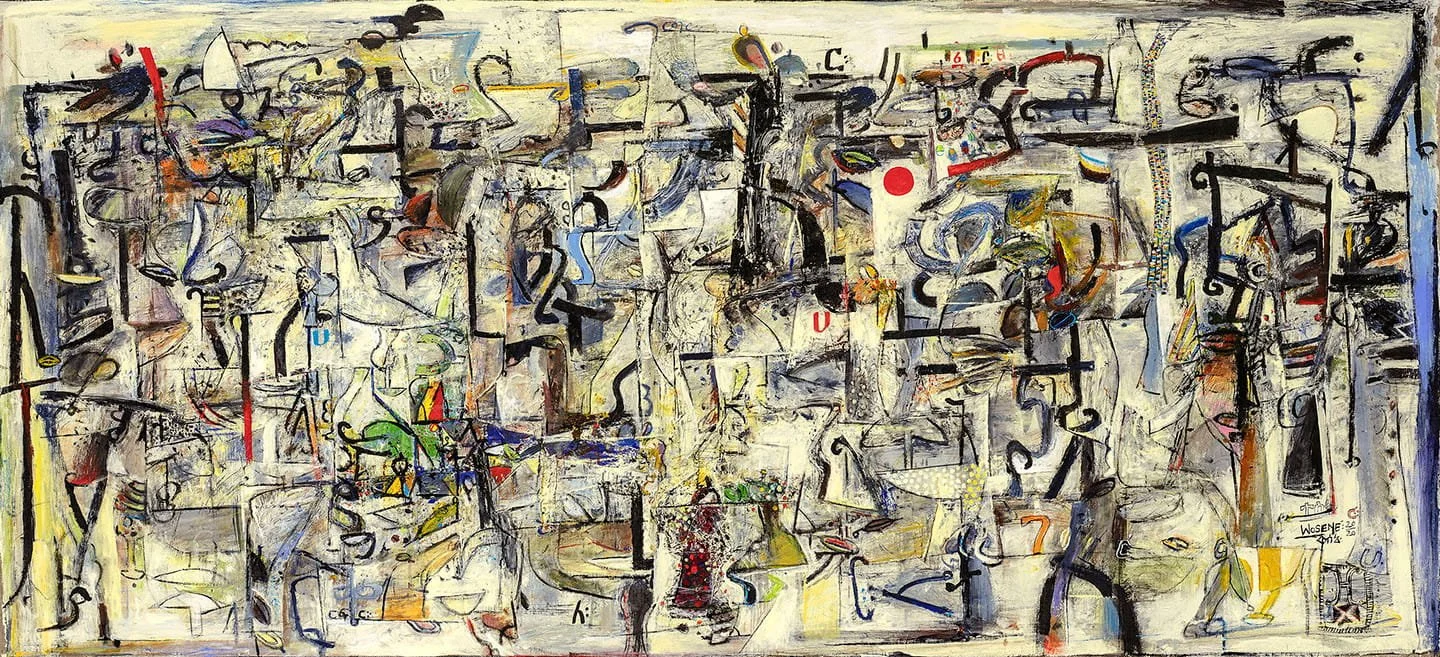
My America IV, 2020, acrylic on linen, 36” x 78” (91.4 x 198.1 cm) Courtesy of Lori Austin Gallery, Sonoma, CA
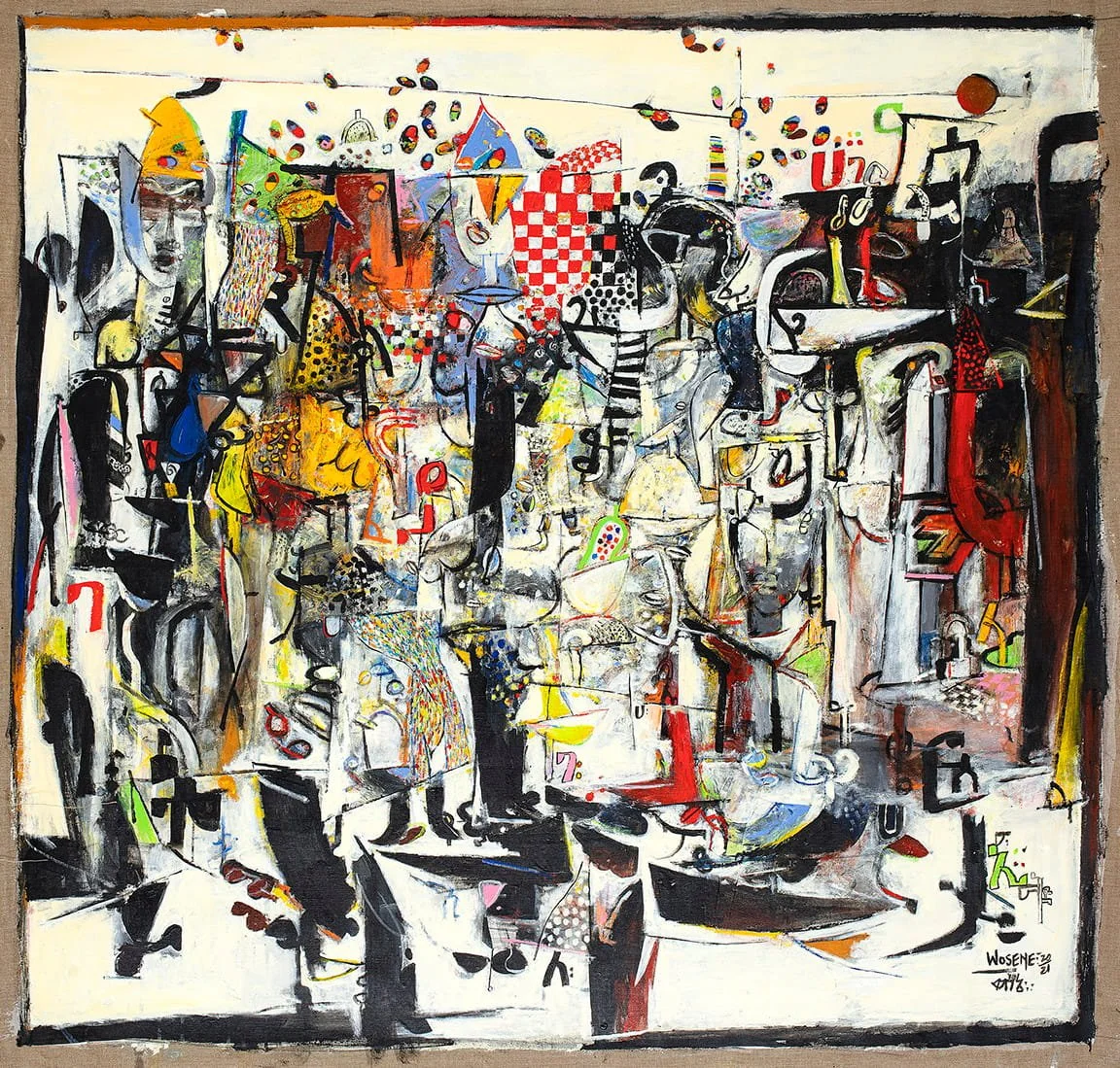
A Taste for Words X, 2021, acrylic on linen, 50” x 54” (127 x 137.2 cm) Collection of Crocker Art Museum, Sacramento, CA
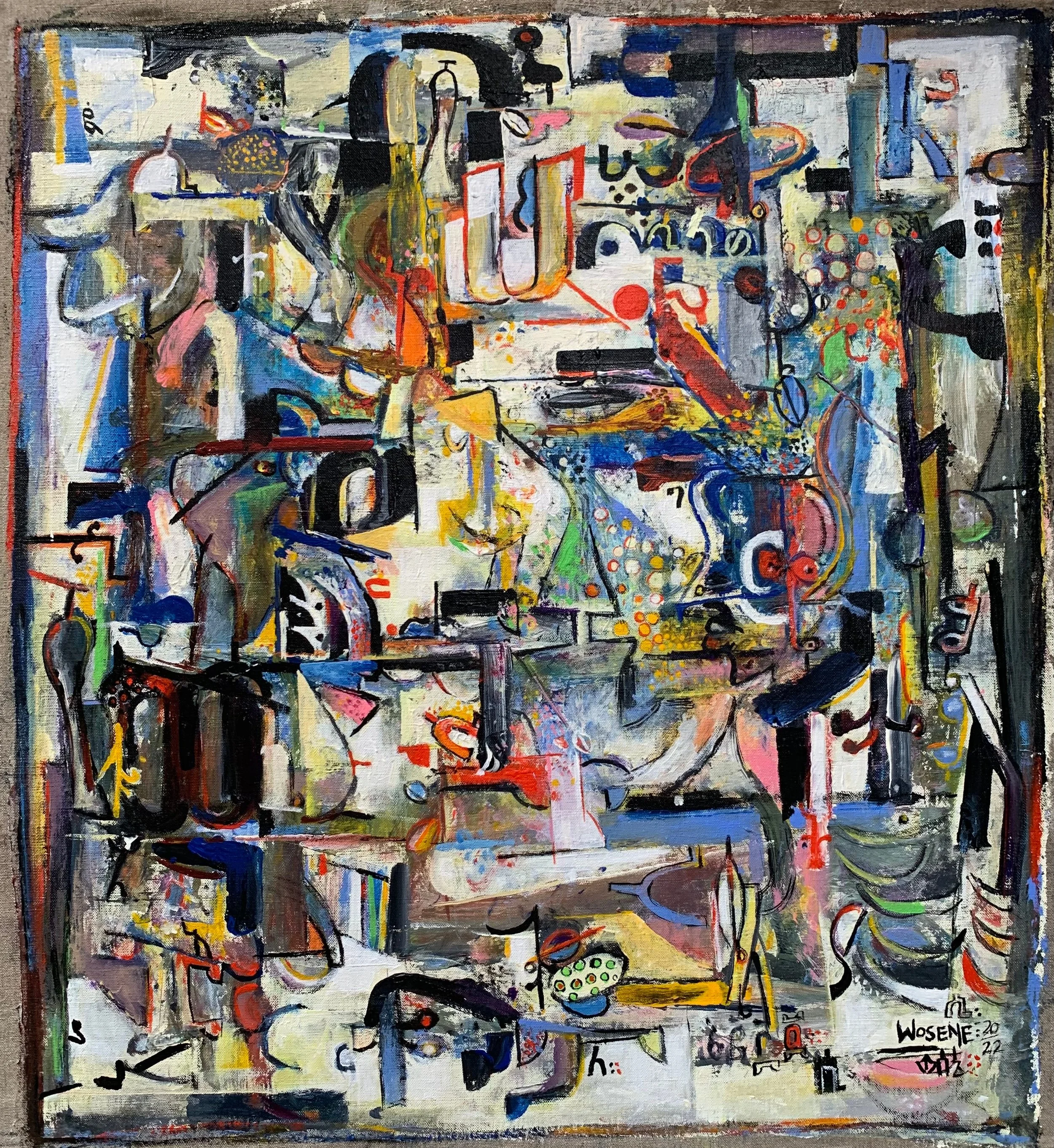
You Are Always New IX, 2022, acrylic on linen, 28” x 24” (71.1 x 61 cm) Courtesy of Winfield Gallery, Carmel, CA
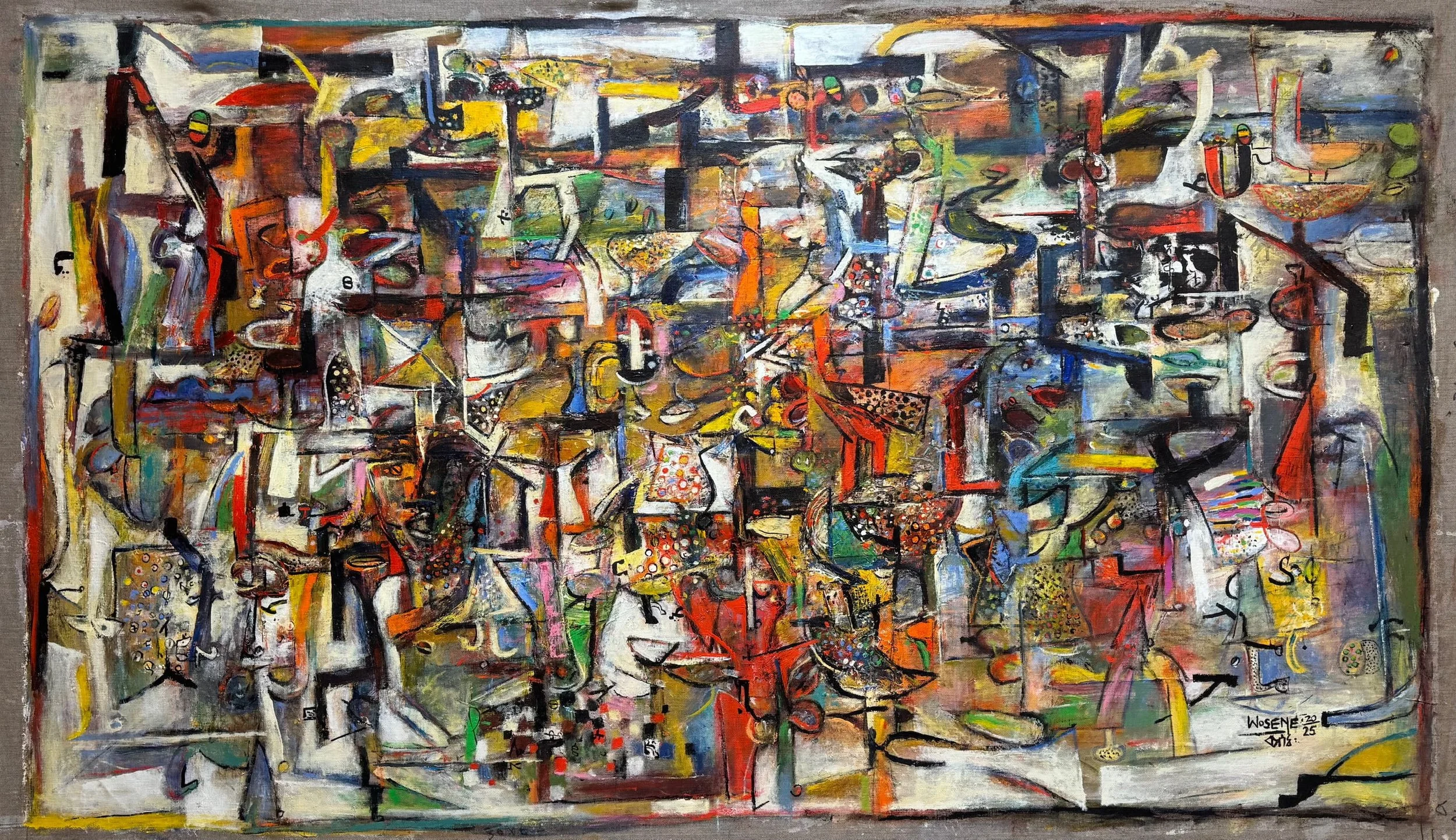
The Color of Change, 2025, acrylic on linen 36” x 62” (91.4 x 157.5 cm) Private collection
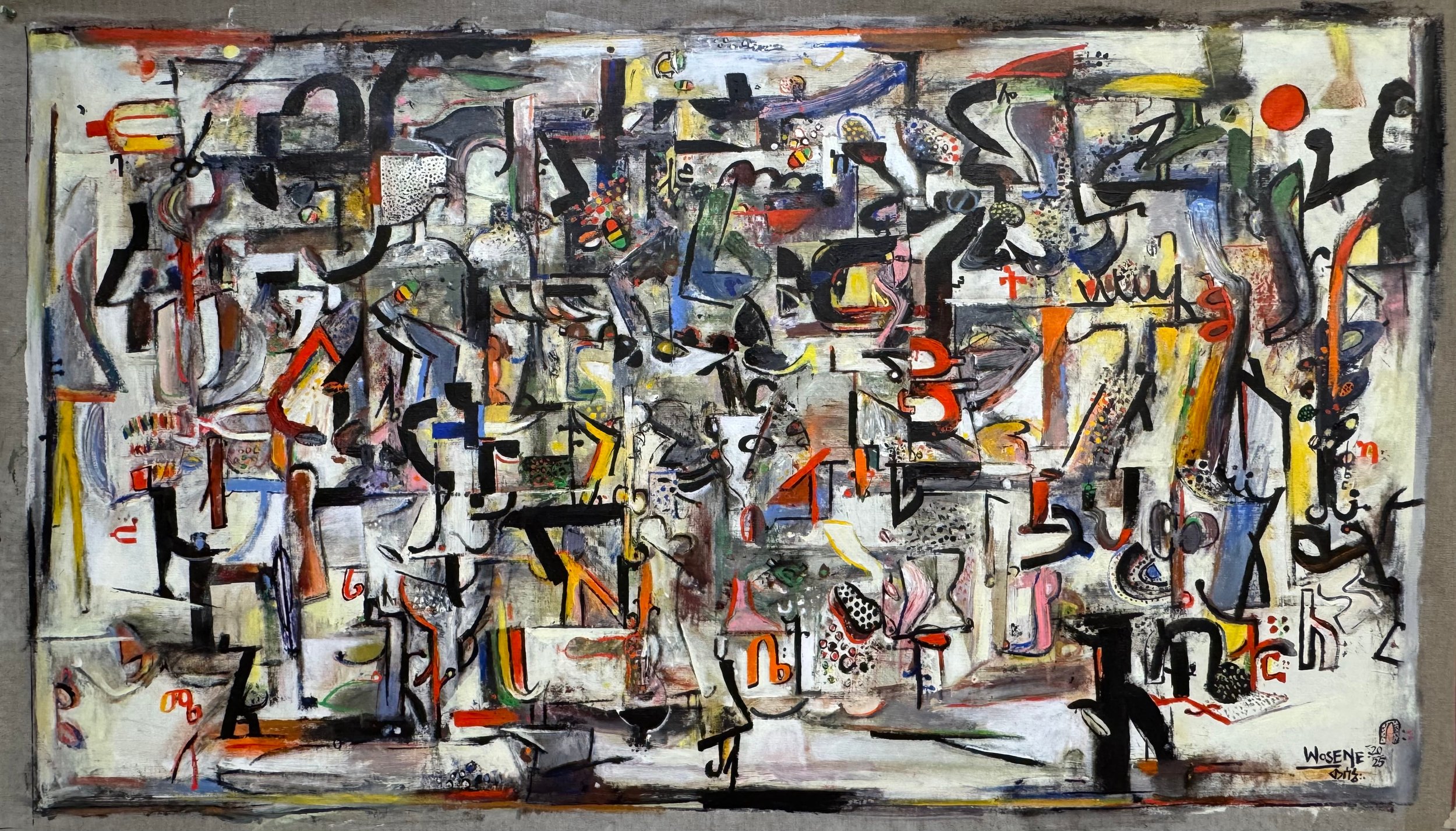
The Life of Words, 2025, acrylic on linen, 32” x 58” (81.3 x 147.3 cm) Private collection
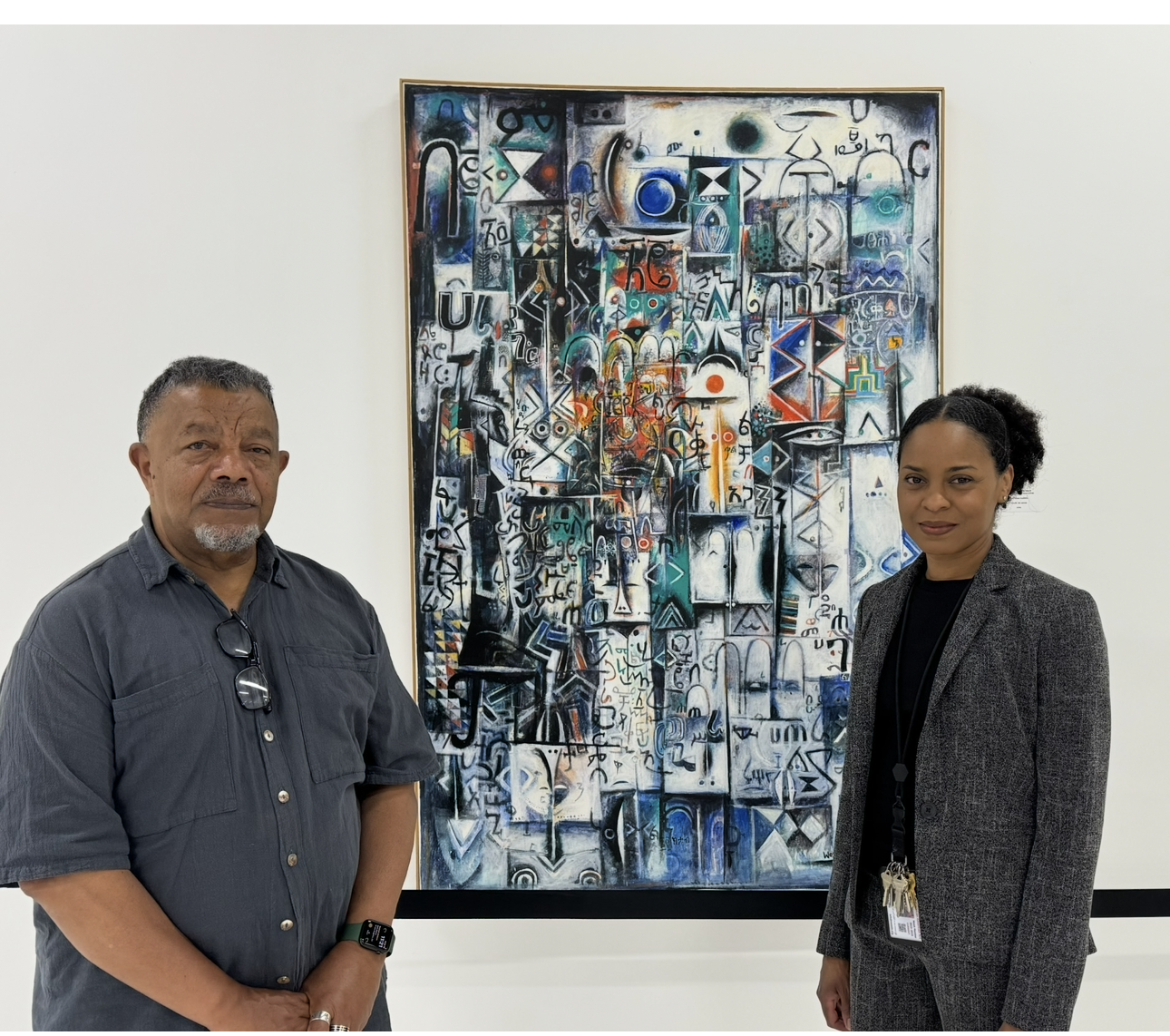
Wosene with Keasha Dumas Heath, Executive Director of Museum of African American Art, Baldwin Hills, CA and his painting, Gods of the Forest (1993), in the permanent collection of the museum.
You Are Always New
Writing (and reading) about Wosene’s work seems almost the wrong thing to do because he paints to captivate our eyes with visions such as we have never imagined. And that’s the point. Learning about Wosene’s background as an artist is good to do because it tells us how life has shaped him and conditioned his artistic motivations. But what he paints is the language he gives us to read, generously filling our eyes with an endless sensorium of colors, forms, motion and emotion conjured through a process he describes as “inchoate and exploratory, an interplay of accident and intention, of curiosity and discovery.” [1]
Follow his hand across the canvas from edge to edge, corner to corner. Enigmatic shapes, shadowy images, even Amharic letters appear and dissipate in spaces that bend and morph while intricate touches of color and pattern glimmer on or just below the surface. Interactions occur everywhere we look, and the edges are just as involved as the center. Your eye can sense forces at play and then react to surprising adjacencies and collisions that result from the artist testing how the colors will mix and compare. Like a jazz musician and master of improvisation, when he starts applying paint, his canvas becomes a space of new encounters, an uncharted journey propelled by an adventurous eye and spirited mind.
Once he works a painting through, could he find where he started? Is the beginning still there (recognizable where it was)? Like Coltrane’s first notes that modulate in memory as the performance moves, Wosene’s initial strokes are transformed as he weaves his labyrinthine compositions more and more intricately, trying out fresh impulses, intensifying the magic. Where did it start? Does it end? Engaging with his paintings will take you far from your everyday. To speak, they do not need our words, just our eyes.
In Another Poem of Gifts, Jorge Luis Borges extols the ever searching and unceasing responses by artists in a universe both continuous and infinite.
I want to give thanks to the divine
Labyrinth of causes and effects
For the diversity of beings
That form this singular universe . . .
For the fact that the poem is inexhaustible
And becomes one with the sum of all created things
And will never reach its last verse
And varies according to its writers . . .
– Jorge Luis Borges
excerpts from Another Poem of Gifts
translated from the Spanish by Alan Dugan[2]
[1] Excerpt from “Life as a Canvas” by Wosene Worke Kosrof, in AGNI 89 (2019) 131.
[2] Norman Thomas Di Giovanni, ed., Jorge Luis Borges, Selected Poems 1923-1967 (London: Allen Lane The Penguin Press, 1972), p. 219.