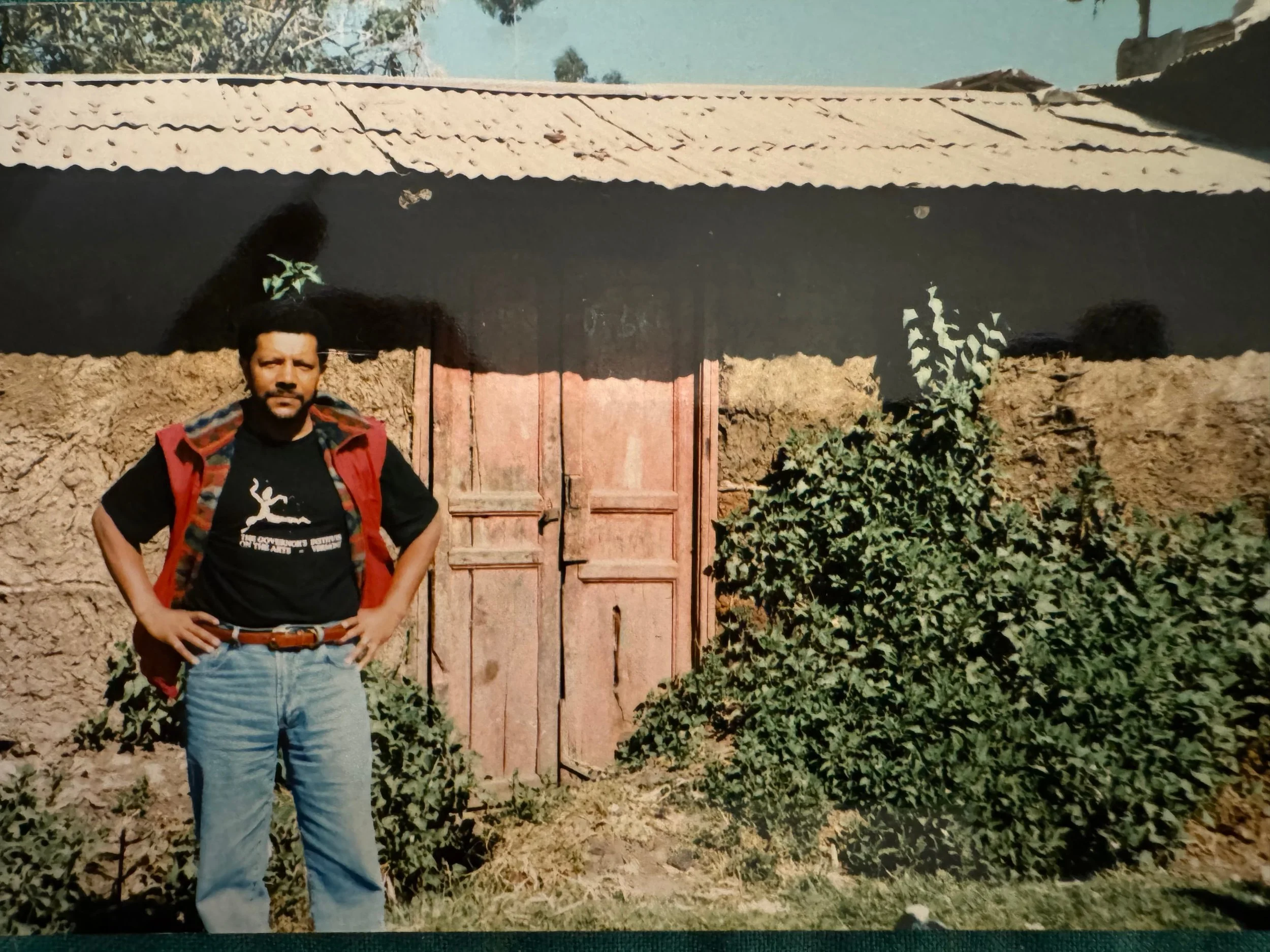
Wosene in 1995 standing in front of his childhood home in the Arat Kilo district of Addis Ababa.
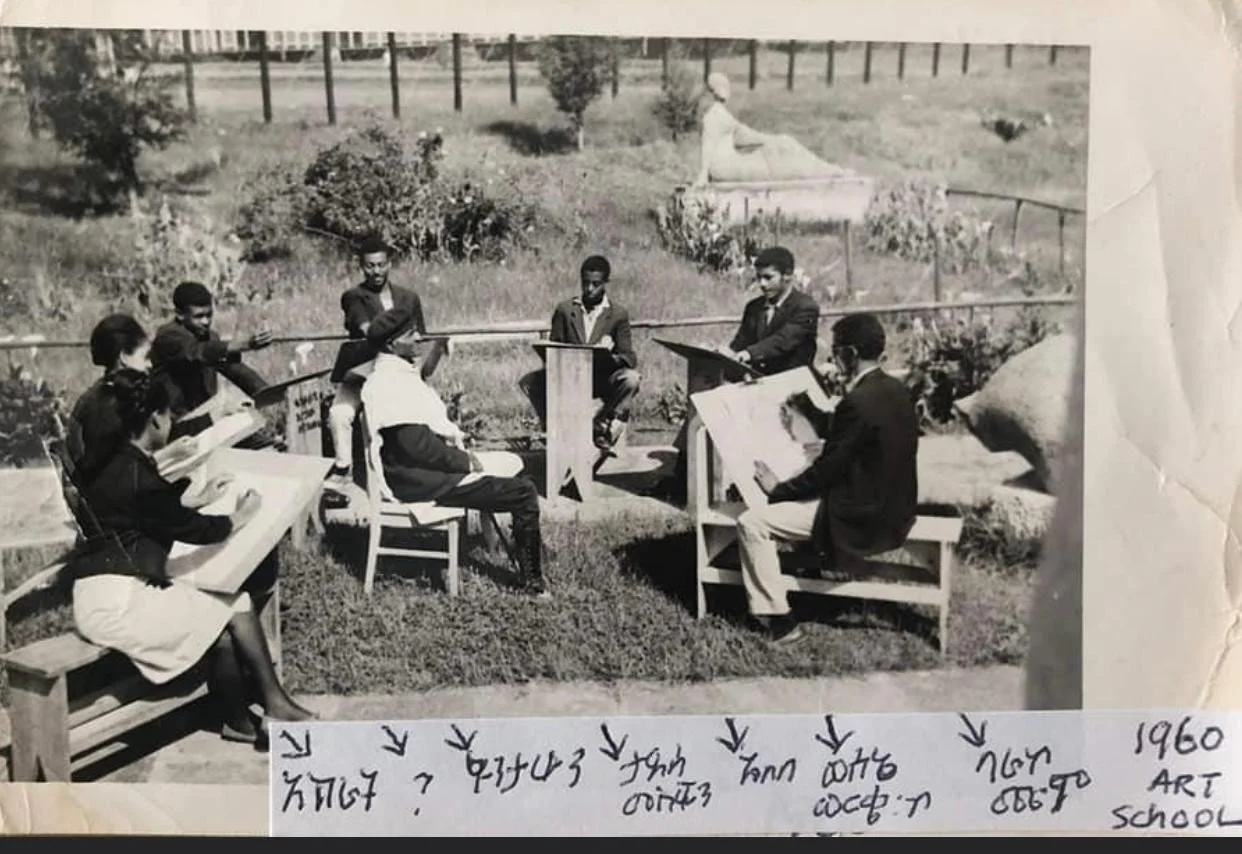
In 1968, Wosene (second from right) participates in a drawing class at the School of Fine Arts, Addis Ababa.
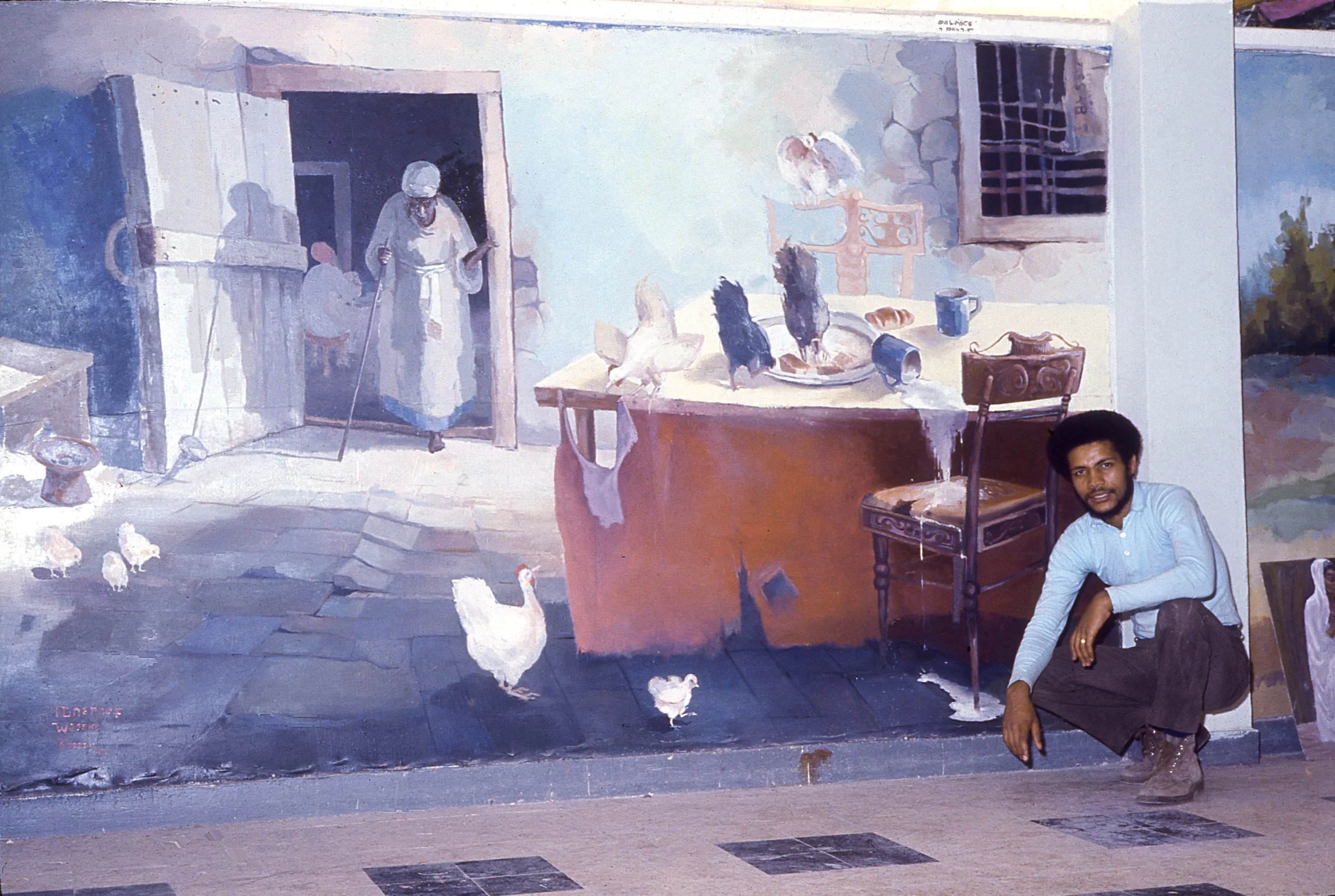
Wosene poses beside his senior thesis painting at the School of Fine Arts in Addis Ababa, April 1972.
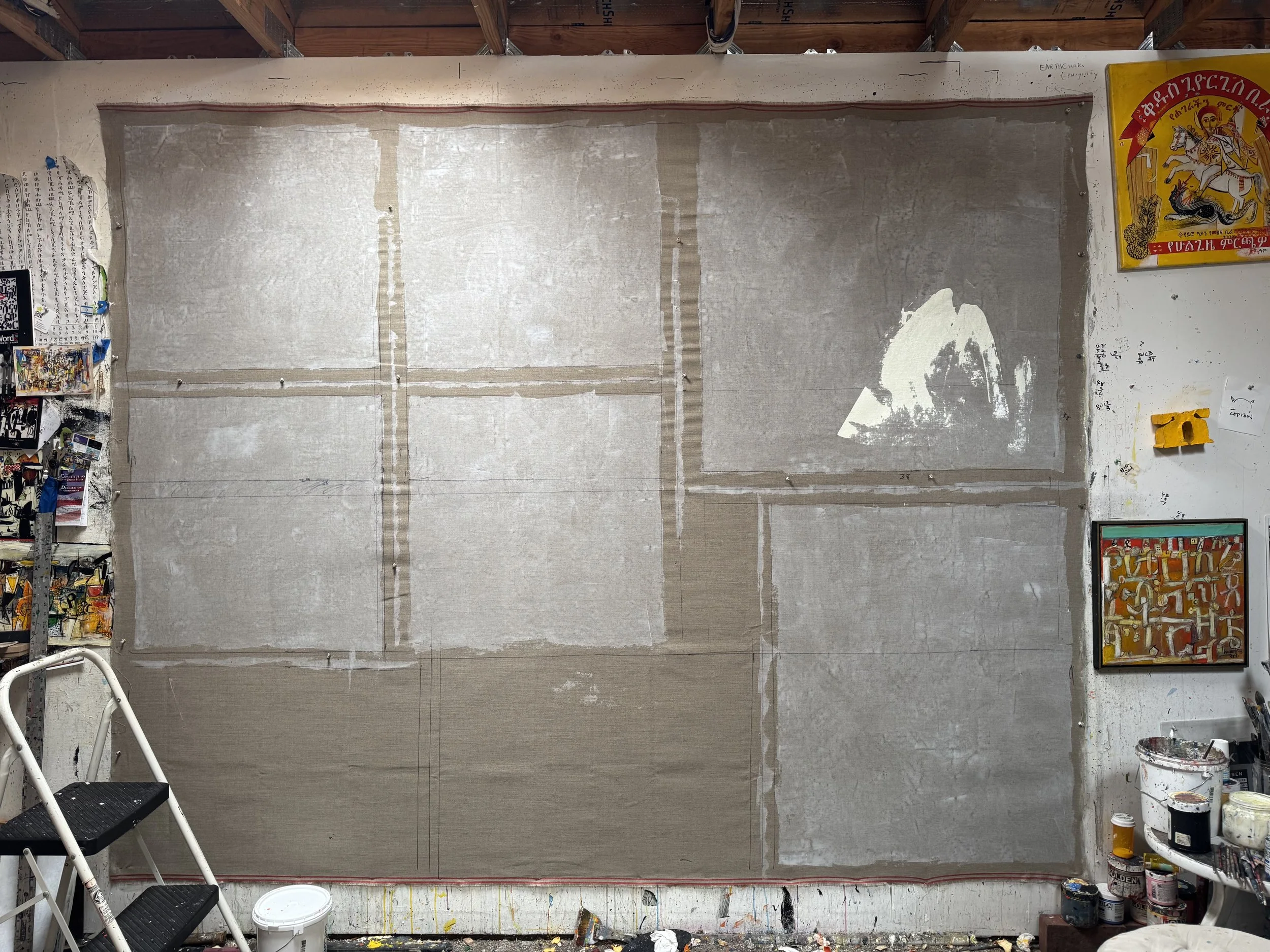
In his studio, Wosene prepares a new canvas, applying a thin layer of molding paste over raw linen, the first step in his painting process.
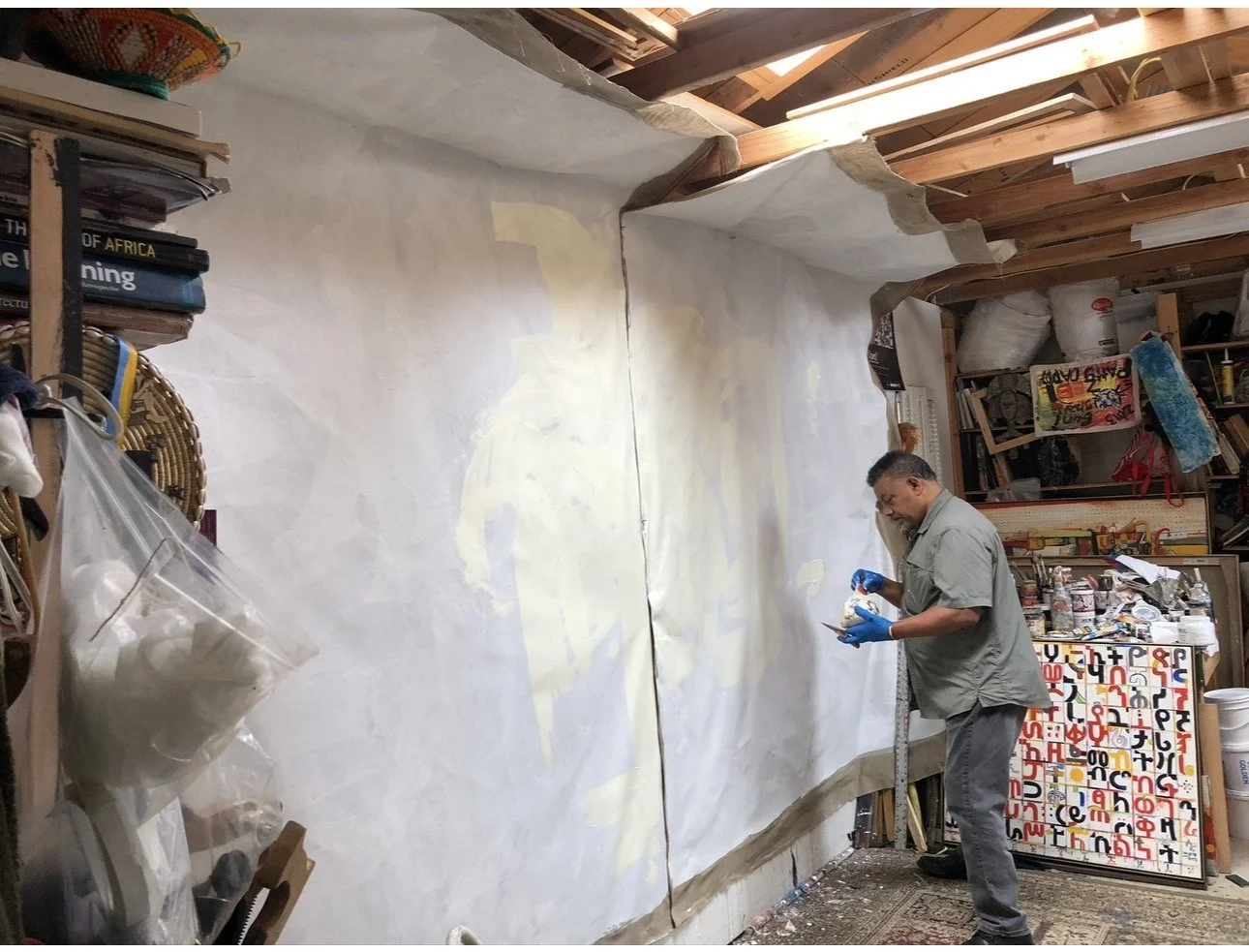
Wosene begins work on his large-scale painting For Love of Freedom, 2018.
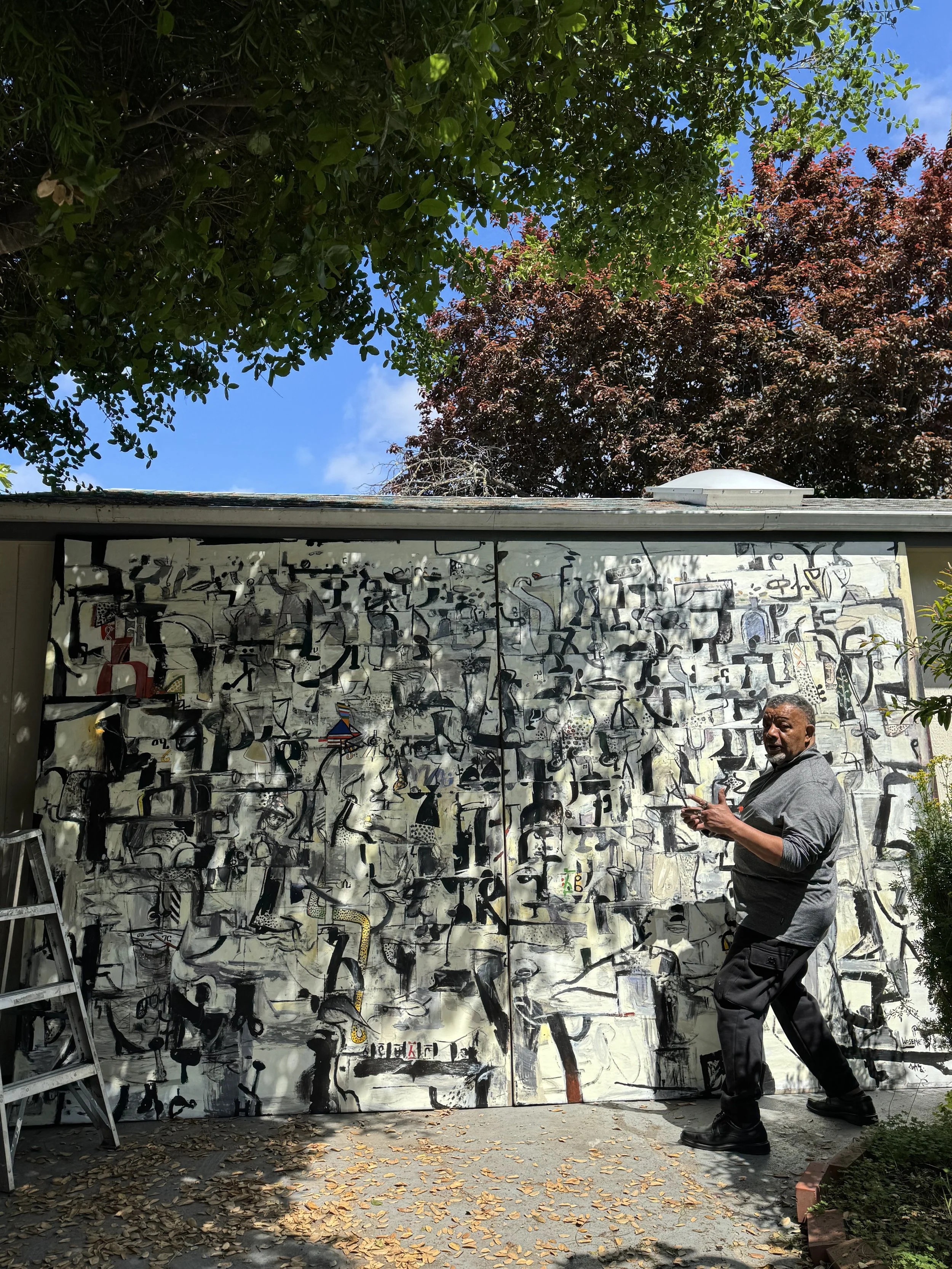
Outside his studio in 2025 with the completed painting, For Love of Freedom, 2018.
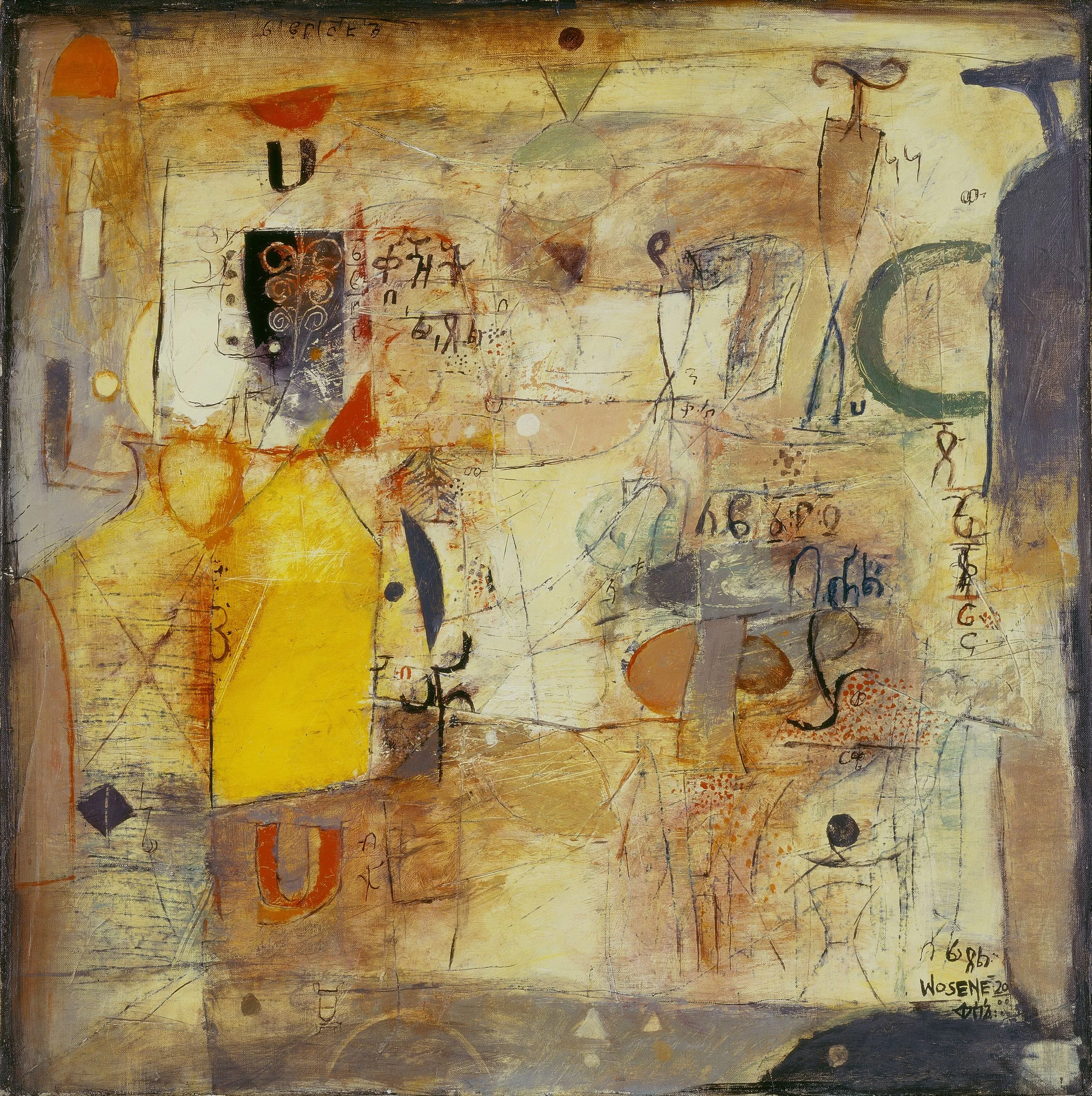
Portrait of the Artist, acrylic on canvas, 25.25" x 25.75" (64 x 65 cm) Collection of the artist
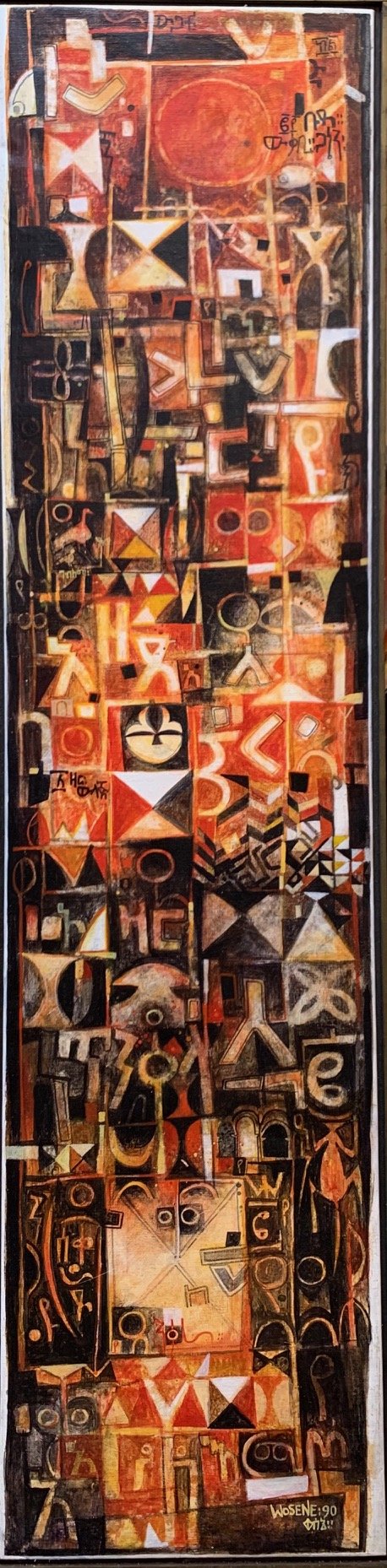
Sun Goddess, 1990, acrylic on linen, 82" x 30" (208.3 x 76.2 cm) Collection of the artist
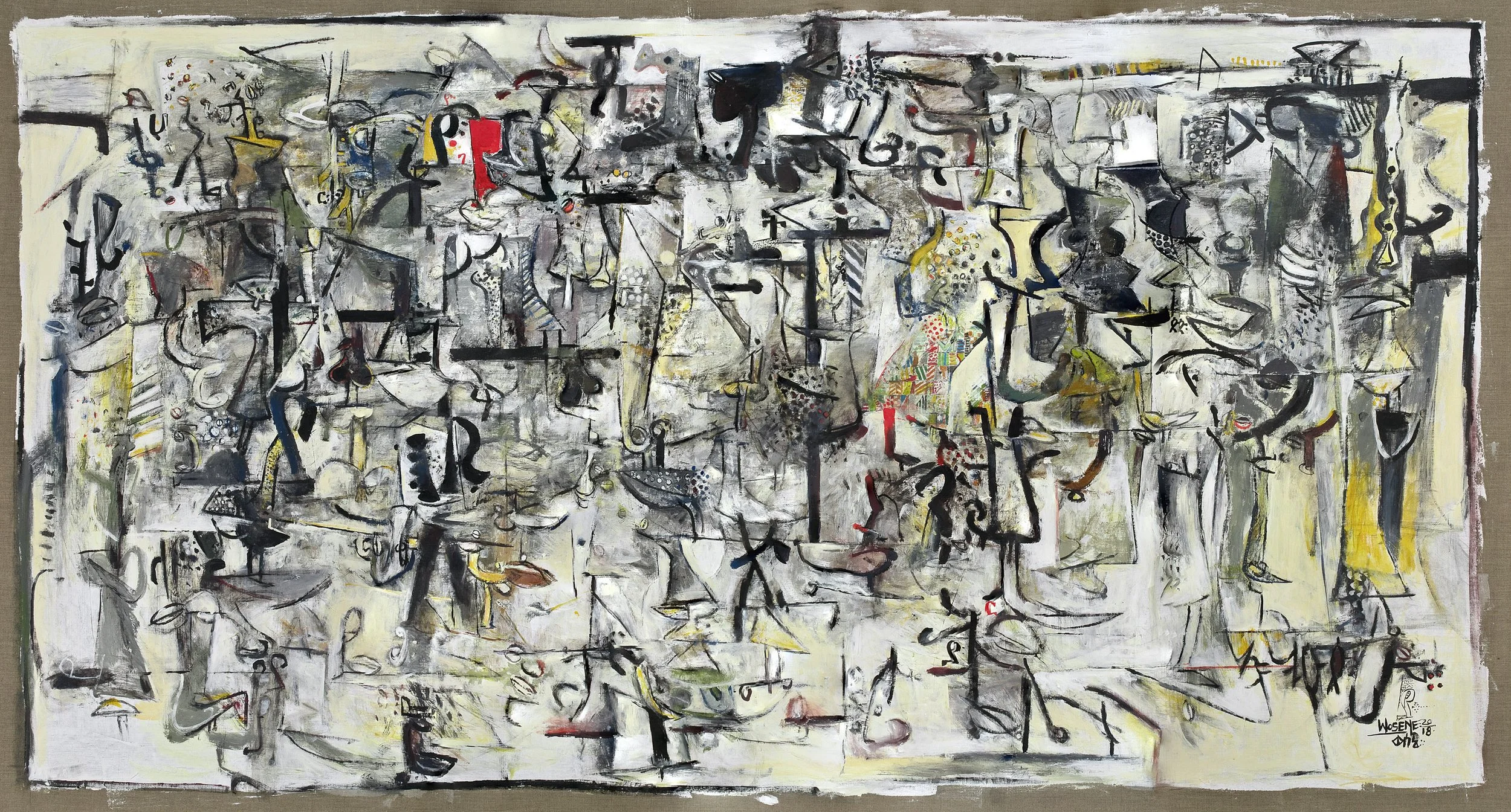
Artist and His Model, 2018, acrylic on linen, 44" x 90" (111.8 x 228.6 cm) Private collection
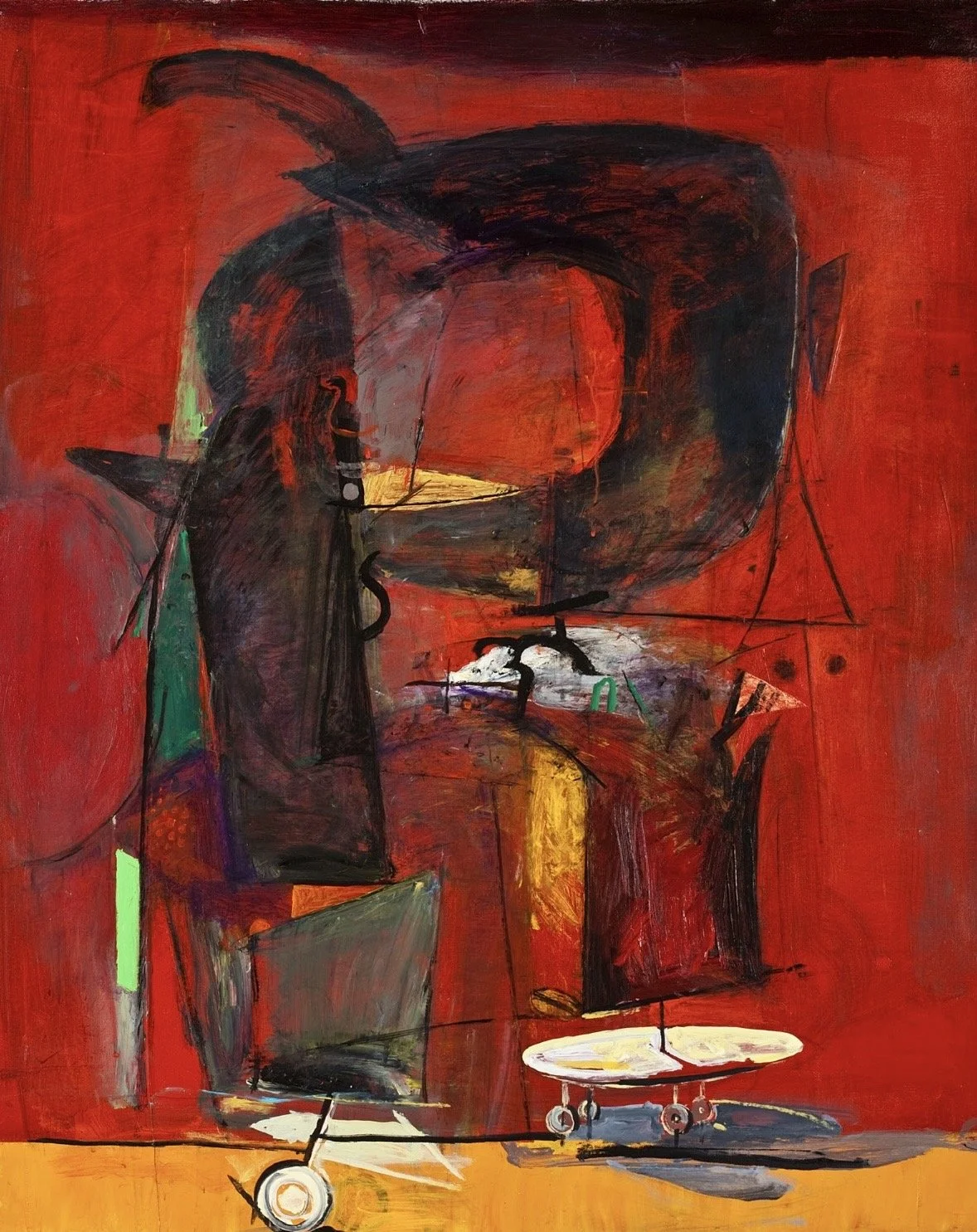
The Inventor II, 2010, acrylic on linen, Private collection
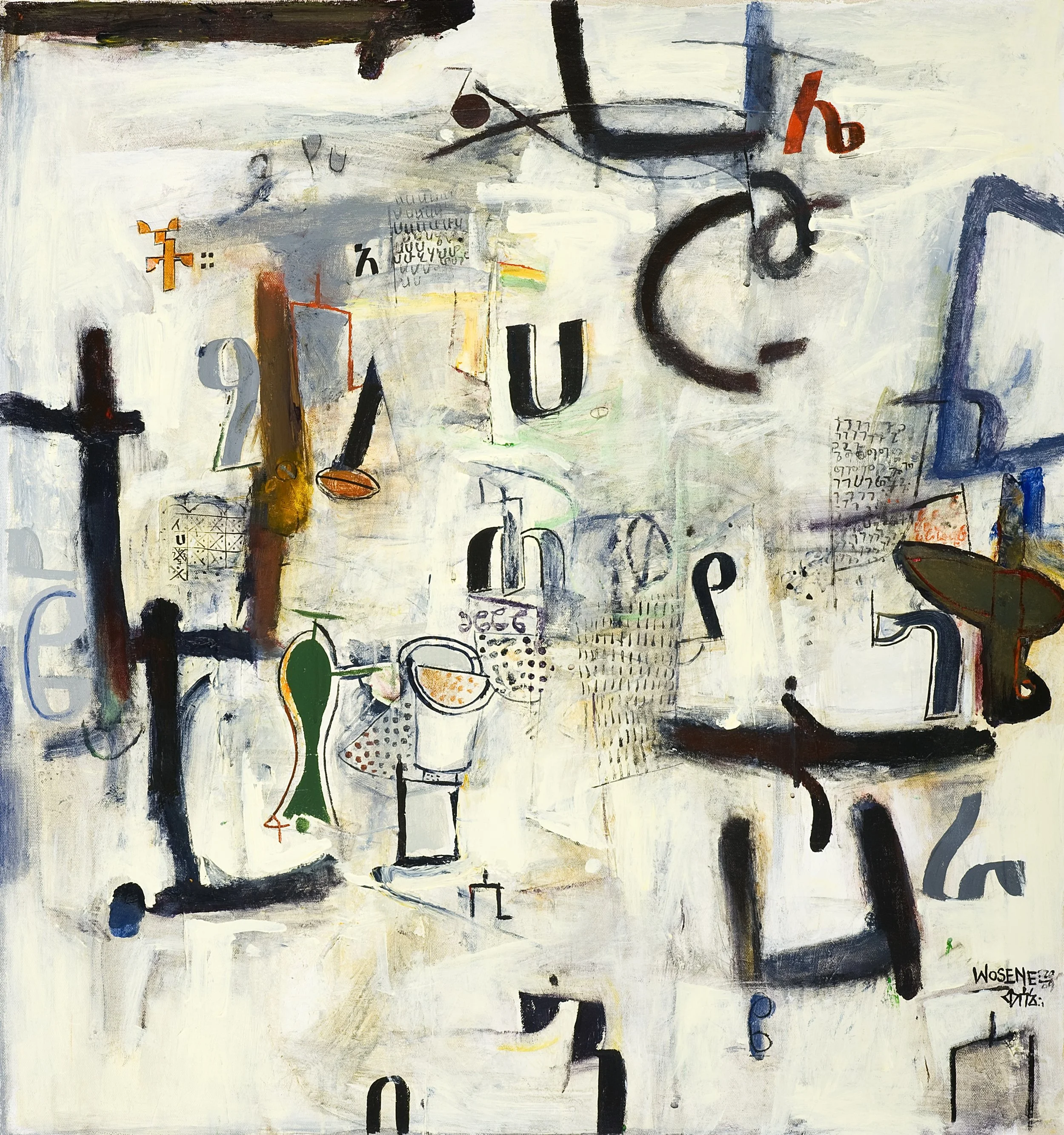
Speaking of Time, 2009, acrylic on canvas, 30" x 27.75" (76 x 72 cm) Collection of the artist
Wosene :: My Life as a Canvas
I started learning Amharic script forms and syllable sounds at the church pre-school in my neighborhood of Arat Kilo (in Addis Ababa, Ethiopia). Sitting on the mud floor and chanting their sounds, I practiced writing the forms with a stone on a roughhewn slate . . . I was enchanted by the lines, contours, tails, and feet of the letters and quickly became aware of them all around me: street signs, buses, store windows were alive with these forms that, to me, took on a life of their own.
This is Wosene’s story, about how Amharic writing captured his eye and imagination. As a young boy, he was drawing all the time. The artistic passion that seemed born in him was recognized by his older brother, Mulatu, who pushed him to go to art school, which he did, earning at BFA with distinction in 1972 and joining the faculty at the School of Fine Arts in Addis Ababa but the success of his training and pursuit of artistic identity collided by the Ethiopian Revolution and the repression of creative freedom, prompting him to make a daring exodus across Africa to America. Although he left the land, he didn’t leave Ethiopia behind and the living letters of Amharic script have remained a constant throughout his career, blending with new experiences as his career has blossomed during nearly fifty years in America.
The script is my inspiration . . . I am still enchanted by those shapes. I see them in the leaves of the fig tree in my garden, in the tiny feet of the hummingbird at my window, in the spices I scatter into the foods I prepare. I hear them in the jazz of Coltrane, Miles Davis, Monk, Charlie Parker that plays in my studio as I paint.
As an immigrant, I have always held travel as central to my art. I’m “imprinted” by the new, the different, the strange, the elegant . . .
Wosene has generated an impressive body of work where each painting entices the eye in unexpected ways, offering spaces to explore, and forms and colors that allure and surprise. They invite us to join him, which is what he wants us to do in discovering the savory visual feast they offer.
When I am in the studio, I begin with fear—fear that nothing will come to fill the blank canvas tacked on the wall in front of me. Then I turn on music, let the sounds stir up my energy, and begin to put bold or delicate brushstrokes on canvas. Though I have the shadow of a painting in my head, I do not sketch beforehand. Instead, my outer and inner canvases–that of my mind and that of my surroundings–interact, and my fear subsides for the moment as I give myself over to a process that is inchoate and exploratory, an interplay of accident and intention, of curiosity and discovery . . . (where) . . . each canvas develops a new vocabulary of its own.
Excerpts from “Life as a Canvas” by Wosene Worke Kosrof, in AGNI 89 (2019) 131, 139.